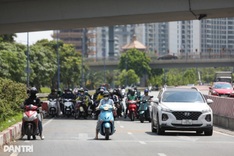
Under the capital’s 100-year master plan, the city aims to ease inner-city congestion by strengthening road and rail links with neighbouring provinces, including Phu Tho, Thai Nguyen, Hung Yen, Haiphong, Bac Ninh, Ninh Binh and Quang Ninh.

The plan calls for closer integration with national projects, including the North-South high-speed railway and the Lao Cai-Hanoi-Haiphong rail line, alongside new inter-regional rail links to northern border provinces.
Authorities also plan to expand the urban rail network, including underground metro lines within Ring Road 3, and apply transit-oriented development models at major hubs to optimise land use around stations, parking and commercial areas.
Priority projects include accelerating metro Lines 2 and 5 (Van Cao-Hoa Lac), advancing Ring Roads 4.5 and 5, upgrading radial arterials, and building new bridges to link outer districts and open up development on both sides of the Red and Da rivers.
The city will also review plans to expand Noi Bai International Airport, study dual-use operations at Gia Lam and Hoa Lac airports, and reserve land in the southern district of Ung Hoa for a second airport serving the capital region.
Overall, Hanoi plans to develop 14 urban rail lines totalling about 1,000 kilometres, alongside major ring roads and expanded national highways, as part of efforts to reduce inner-city congestion and strengthen regional transport links.