Two major undersea fibre-optic cables carrying internet traffic between Vietnam and overseas destinations have experienced disruptions, affecting international connectivity speeds for users across the country.
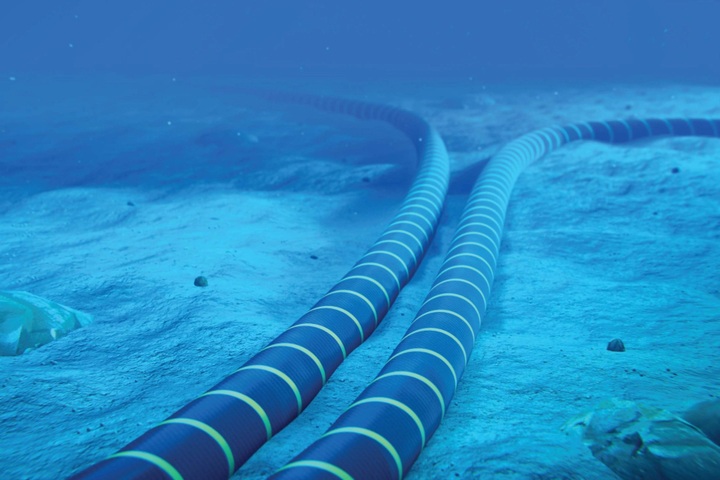
Submarine cables linking Vietnam to international networks have been disrupted, affecting internet speeds (Illustrative photo: PT).
According to a Vietnamese internet service provider, the SJC2 cable suffered a fault on the S4 Chung Hom Kok segment near Hong Kong, while the AAE-1 system lost connectivity due to a problem on the S1.H2 segment near Thailand's southern coastline.
The operators of both cable systems have not yet disclosed the cause of the outages or provided an estimated timeline for repairs.
The incident marks the first major disruption reported on the SJC2 cable since it entered service. For AAE-1, it is the second outage recorded in 2026. The previous fault occurred in late February on a segment near Thailand and reduced Vietnam's international internet capacity by an estimated 8 to 10 per cent.
Following the latest disruptions, Vietnamese internet providers rerouted international traffic through alternative cable systems to minimise the impact and maintain service continuity for users.
AAE-1 is an undersea cable project valued at USD 820 million and backed by 19 international partners, including Vietnamese telecommunications operators. The system entered commercial operation in July 2017.
Stretching approximately 23,000 kilometres, AAE-1 links Asia, Europe and Africa, with landing points in Hong Kong (China), Vietnam, Cambodia, Thailand, Malaysia, Singapore, Myanmar, Pakistan, India, Oman, the United Arab Emirates, Qatar, Yemen, Saudi Arabia, Djibouti, Egypt, Greece, Italy and France.
SJC2, by contrast, only entered operation in July 2025. The USD 439 million cable spans roughly 10,500 kilometres and connects Singapore, Hong Kong and Japan, with multiple landing stations including one in Binh Dinh Province, Vietnam.
Disruptions to international submarine cable systems have become a recurring challenge for Vietnam, with outages occurring almost every year and often affecting internet quality and connection speeds.
The most severe disruption occurred in February 2023, when all five undersea cable systems then serving Vietnam simultaneously experienced faults, significantly degrading internet services nationwide.
Industry experts say submarine cable failures can stem from a variety of causes. The most common involve ships dropping or dragging anchors in areas where cables are laid on the seabed, inadvertently damaging the infrastructure.
Other disruptions can result from power supply issues, maintenance activities or technical failures within the cable systems themselves. Such incidents are generally easier and quicker to resolve.
Vietnamese telecommunications providers have increasingly explored terrestrial fibre-optic routes as an alternative to reduce dependence on submarine infrastructure. However, global internet traffic and intercontinental data transmission remain overwhelmingly reliant on undersea cable networks.
Vietnam currently has eight international submarine cable systems: AAG (Asia-America Gateway), APG (Asia-Pacific Gateway), SMW-3 (Southeast Asia-Middle East-Western Europe 3), IA (Intra Asia), AAE-1 (Asia-Africa-Europe 1), TVH linking Hong Kong, Thailand and Vietnam, SJC2 (Southeast Asia-Japan Cable 2), and ADC (Asia Direct Cable), which connects Vietnam with China, Hong Kong, Thailand, the Philippines, Singapore and Japan.