The trial, operated by Vietnamese technology company Phenikaa-X, began on Aug. 25 and will run on designated routes at Hoa Lac Hi-Tech Park and Vietnam National University's Hoa Lac campus.
The project covers four types of autonomous vehicles, including buses, robotaxis, automated cleaning vehicles and delivery robots.
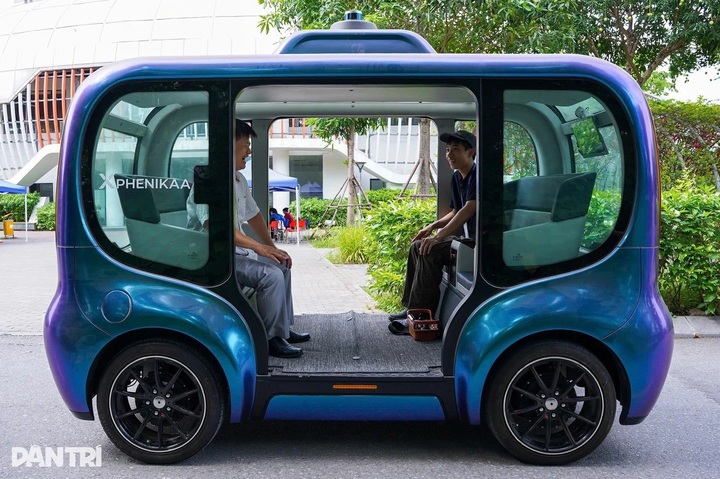
The vehicles will use LiDAR, cameras, high-definition 2D and 3D maps, high-precision GPS and artificial intelligence technologies including simultaneous localisation and mapping (SLAM), machine learning and deep learning.
The trial aims to assess the safety, reliability and operational readiness of autonomous vehicles in real-world traffic conditions, as well as the effectiveness of autonomous public transport, passenger experience and integration with existing transport systems.
The results will be used to help develop data, technical standards and operating procedures for autonomous vehicles in Vietnam, while supporting further research and development of the technology.
Vehicles will operate from 9 am to 4.30 pm and will be limited to a maximum speed of 40 km/h.
During a 12-month public trial, autonomous buses are expected to carry 40,000-50,000 passenger trips and robotaxis 20,000-35,000, with capacity capped at eight and four passengers respectively, excluding safety supervisors.
Phenikaa-X will be temporarily exempt from certain regulations governing autonomous vehicles within the approved scope, locations and duration of the trial.
The exemptions apply only to testing and technology development and do not cover commercial production or business operations. The company will not be allowed to operate commercial passenger services or charge fares during the trial.