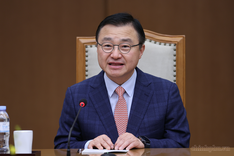
Dr. Tran Dinh Thien, respected economist and director of the Vietnam Institute of Economics
In recent years, a number of weaknesses in Vietnam's labour force have come to public attention. How will these problems affect the country during the process of economic integration?
In my opinion, our current management structures do not keep up with development in the real business world. Many procedures make it difficult for companies to operate in Vietnam. The situation begs the question: How will we compete in the future with these inadequacies in the business environment, including the banking system, the high cost of doing business in Vietnam and low returns. Many companies are struggling just to survive using stop-gap methods.
Much has been said about our "golden population", because average age of the Vietnamese citizens is an economic advantage. But this will cease to matter within the next decade. In addition, it's surprising that our productivity is so low in relation to other countries, according to recent reports by independent international organisations.
Foreign investment has a very strong focus on outsourcing and benefits from tax incentives. Now it's necessary to amend our investment attraction and human resource training policies.
How is the process of integration going, and what are the specific characteristic for this process in relation to Vietnam?
Vietnam has signed around eight bilateral and multi-lateral free trade agreements, and we are planning to sign several new ones with the EU and South Korea. There are also discussions with the ASEAN Economic Community (AEC) and the Trans-Pacific Partnership (TPP). Vietnam's economy has been opening for some time, but it also puts pressure on our citizens and businesses.
Vietnam has a road map for integration and benefits from tax sponsorship with the World Trade Organisation. That agreement, signed in 2007, says that tax collection on common imported goods must be cut to between zero and 5% compared to the previous rates of 90% to 95%.
There is a real danger that Vietnam may become a waste and technology dump site for other countries. This is because policy on technology and environmental protection are not strict enough. That is the reason I think that the removal of tax barriers may lead to problems in the future.
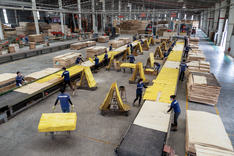
The labour force in Vietnam is largely unskilled in relation to highly industrialised countries and those with knowledge-based economies. This fact should be kept in mind as we integrate with the AEC.
Domestic businesses have also found it difficult to recruit competent medium to high-level managers. Skilled Vietnamese workers often have the option to work in other countries, and this country is left with a workforce that is unimpressive compared to other regional counties. A recent World Bank report said that the average Singaporean worker’s abilities in terms of productivity is equivalent to 15 average Vietnamese workers. It's easy to understand why domestic firms might more readily hire foreign workers than Vietnamese.
Why does the government continue on the path of integration despite unexpected disadvantages?
We have a lot of opportunities to build several valuable partnerships at the moment. It would be easier to sign FTAs with the EU and make TPP agreements early on.
Some say that in many cases in the formulation of these agreements, Vietnamese representatives sign on to disadvantageous terms and pass on the risk to enterprises. What do you think?
In some cases, we accept conditions for partners in exchange for beneficial tax policies on the other end. Negotiation of these types of agreements is always difficult.
During the negations with the WTO we took even the small aspects of the business environment into account. We reached agreements with major partners about tax reduction road maps along with several other incentive policies. However, it seems that in many cases, enterprises are not yet taking advantage of these potential benefits.
I think that global integration is inevitable and good for the country. The integration process will help the business community realise their weaknesses and learn how to improve.