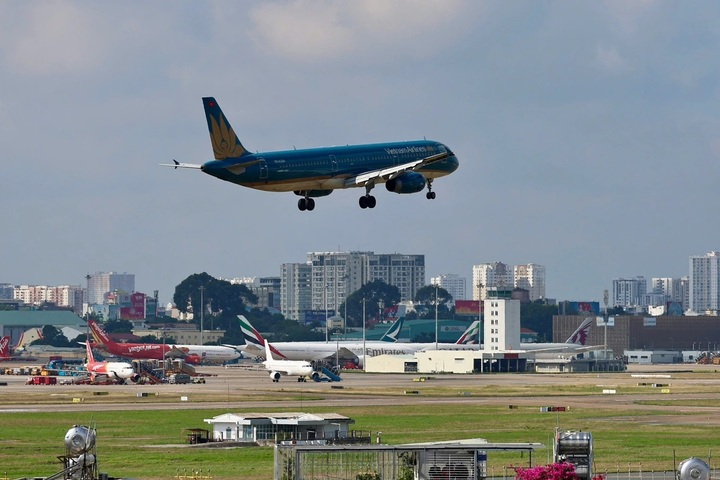
According to the Civil Aviation Authority of Vietnam (CAA), cargo volumes handled through the country's airports rose alongside passenger traffic during the first six months of the year.
Total air cargo throughput exceeded 923,000 tonnes, an increase of more than 13 per cent from the same period last year. The growth was largely fuelled by stronger exports of electronics and the recovery of cross border e-commerce.
Vietnamese airlines transported more than 227,000 tonnes of cargo during the period, up 0.6 per cent year on year, with the remainder carried by international airlines.
The sustained growth has created new opportunities for domestic carriers, including Vietnam Airlines and Vietjet Air, to expand their cargo operations.
Vietnam Airlines said it is accelerating its cargo development strategy by strengthening operational capabilities, building a modern air logistics ecosystem, investing in dedicated freighter aircraft and ultimately establishing a specialised cargo airline.
"This will provide the national carrier with a stronger platform to expand transport capacity, improve supply chain connectivity and meet growing demand in both domestic and international markets," a Vietnam Airlines representative said.
According to the latest forecast from the International Air Transport Association, global air cargo revenue could reach USD 162 billion in 2026. The continued expansion of the market is also increasing demand for standardised data systems and stronger connectivity across the logistics industry.
Industry experts identified three major drivers supporting the long term growth of Vietnam's air cargo sector.
The first is the relocation of global supply chains amid tariffs and geopolitical tensions, positioning Vietnam as an increasingly attractive destination for investment in technology manufacturing, electronics, textiles and logistics.
The second is the rapid expansion of cross border e-commerce, particularly for high value products requiring fast delivery.
The third is Vietnam's continued investment in aviation infrastructure between 2025 and 2030.
Major projects are expected to underpin the sector's next phase of growth. Long Thanh International Airport is expected to become a future air logistics hub, while Quang Tri Airport, backed by an investment of more than USD 230 million, is expected to ease pressure on existing airports and expand capacity for high value cargo once operational.
Data integration remains a key challenge
Sheldon Hee, the International Air Transport Association's regional vice president for Asia-Pacific, said Vietnam had become one of the aviation industry's most important growth markets for both passenger and cargo transport in 2026.
He said continued growth in exports, imports and e-commerce would remain a key driver of air cargo demand in the coming years, supporting the expansion and profitability of Vietnam's cargo service providers.
However, industry participants said one of the biggest obstacles remains fragmented cargo data management.
Information for individual shipments is currently stored across separate systems operated by airlines, logistics companies, ground handling providers and other stakeholders. The lack of integration makes information sharing, cargo tracking and operational coordination less efficient, increasing both processing times and operating costs.
Nguyen Quang Trung, deputy chief executive of Vietnam Airlines, said the carrier is accelerating digital transformation across its operations, with cargo services identified as a strategic priority.
Vietnam Airlines is working with the International Air Transport Association to implement the ONE Record standard, which enables all participants in the logistics chain to access and share a single, secure and standardised data source for each shipment.
According to Trung, adopting the standard will improve supply chain connectivity, enhance shipment tracking, increase data transparency and streamline cargo operations.
"When companies use a common data standard, they can shorten processing times, reduce operating costs and improve service quality," he said.