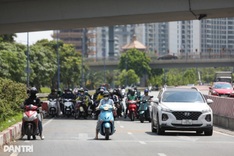
Nguyen Kien Giang, deputy head of the HCM City Construction Department’s Division for Transport Infrastructure Maintenance and Operation, released the information at a press briefing on December 4.
Giang said traffic density has increased sharply on major routes, meaning even minor collisions or technical issues can quickly lead to gridlock.
Average traffic speeds across the city remain low, with vehicles moving at 34.3 km/h in the city centre, 35.3 km/h in the east, 33.4 km/h in the west, 32.7 km/h in the south and 39.2 km/h in the north.
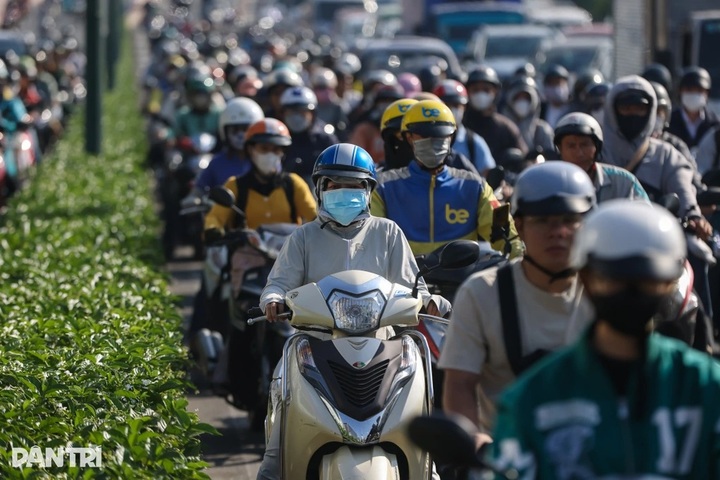
Average vehicle speeds in central HCM City are about 34 km/h (Photo by Nam Anh)
Key congestion hotspots include Dien Bien Phu Street, Vo Thi Sau Street, 3 Thang 2 Street, Xo Viet Nghe Tinh Street, Hang Xanh intersection, Hanoi Highway, Vo Nguyen Giap Street and An Suong interchange.
According to the Department of Construction, congestion has worsened due to a surge in vehicles, especially private cars and cars arriving from neighbouring provinces, while the transport infrastructure has not kept pace with rapid growth.
Ongoing construction projects that narrow lanes, along with accidents and other incidents that are not handled promptly, have also contributed to the deteriorating situation.
To ease congestion, the department has coordinated with traffic police to implement a range of measures. HCM City Police have mobilised local security forces, self-defence militia and ward-level officers to help regulate traffic.
The department has also conducted inspections to tighten control over construction sites blocking streets during daytime hours, urging contractors to restore road surfaces quickly to minimise disruption.
Additionally, HCM City has begun using AI-powered cameras to adjust traffic signal systems in real time to help reduce bottlenecks on busy routes.