Local people in the Central Highland Province of Gia Lai continue to drink water from local rivers which are heavily contaminated while turning away from the wells supported by the Unicef.

Children fetching water from holes
Everyday in the late afternoon, people flock to the Ba and Tul rivers which run through some southeast districts of Gia Lai Province, including Phu Thien, Ia Pa, Azun Pa, to get their drinking water.
They are all from J’rai ethnic group, which has been using these rivers as a source of water for generations. Even though they have been informed that the rivers are polluted, they will not abandon their traditional water source.
According to 58-year-old Ksor Nai, head of Pama Hlak Village, Chu Mo Commune in Ia Pa Distric, since 1993, many families here have been to drill wells by Unicef, but they only use the well water for washing.
“Well water doesn't taste good,” Nai said. “We're all familiar with the taste of river water and prefer to drink that."
Nai also said that they have heard about the pollution in the rivers, especially Ba River. However they believe that filtering the water through rocks and stones will clean it.
“We do not take water directly from the rivers. We dig small holes, around 35 cm deep and 40 cm wide on the banks. Then we wait for the water to seep through the sand into the holes. That takes away most of the pollution in the water," he said.
They then let the water sit overnight in a container to let large particles sink to the bottom.
Most of the people in the area believe that water obtained by this method is fresh and drinkable.

Filtering water with a cloth

A quick swim in the river before returning home

Holes for “fresh water” on the Ba River bank
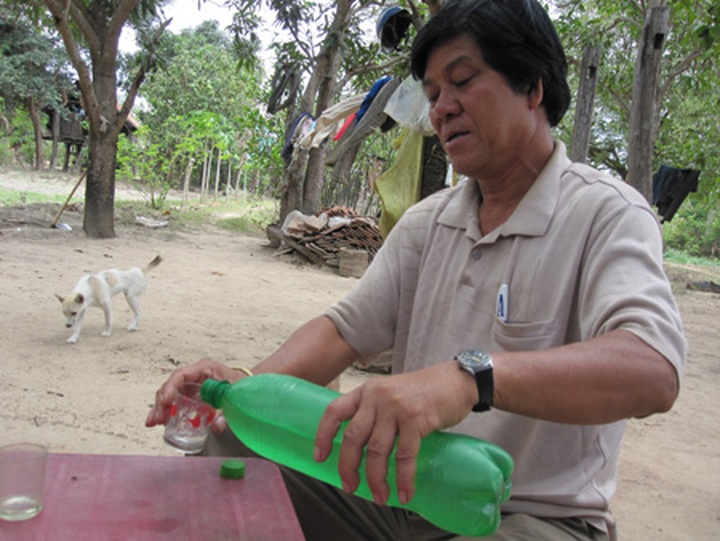
The village elder offers his guest some water

Water from Unicef’s wells used for washing