Mang Ri Commune in Tu Mo Rong District, home to Xe Dang ethnic group, is known as the capital of Ngoc Linh ginseng.
From a folk remedy of the Xe Dang people, Ngoc Linh ginseng is believed to be a precious medicinal herb.
Ginseng is grown under the canopy of trees along the Ngoc Linh mountain ranges at a height of over 2,000 metres above sea level in Tu Mo Rong and Dak Glei districts in Kon Tum and some districts of Quang Nam Province.
Ngọc Linh ginseng was first discovered in 1973 by a team of pharmacists who were searching for medicinal herbs to treat wounded soldiers.

Initially, scientists discovered the stem and root of Ngoc Linh ginseng contained 52 saponin compounds that are very beneficial to health. Recently, scientists have released complete statistics showing there are up to 103 saponin compounds in Ngoc Linh ginseng.
In June 2017 Ngoc Linh ginseng became a national product and since has been commonly referred to as Vietnamese ginseng.Tu Mo Rong District currently has about 1,700 hectares of ginseng.
According to statistics from Kon Tum Province, there are more than 1,200 households and 30 associations growing gingseng.
Many families even borrowed from banks to plant thousands of ginseng trees on Ngoc Linh mountain peak with the hopes of escaping poverty. In addition, local people also learn and grow many precious medicinal herbs suitable for local soil such as a Chinese herbal medicine whose scientific name is Angelica sinensis.
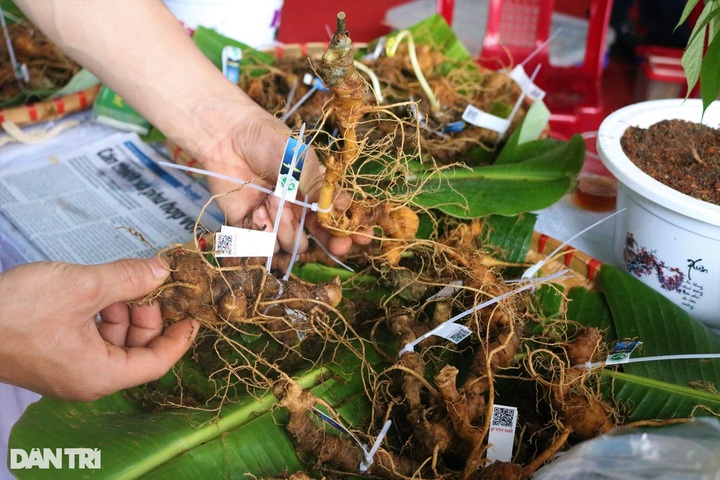
Ngoc Linh ginseng is currently priced at VND120,000-260,000 million (USD5.14-11.15) a kilo.
Ngoc Linh ginseng is currently priced at VND120,000-260,000 million (USD5.14-11.15) a kilo. Each Ngoc Linh ginseng seedling costs VND300,000 while ginseng leaves cost VND5-10 million a kilo.
A Brit, a local man, said local residents keep the forest very well as no one cut down or burned the forest for farming. The old forest with a wide canopy to cover Ngoc Linh ginseng helps them escape poverty.
A Chung said his family as well as many households grow ginseng with the dream of changing their lives through billion-dong profits.