Food safety inspection teams have been facing difficulties in inspecting fruit and vegetable imports as a result of lack of funding and skilled staff.
Recently, this problem was brought into the public eye when it was reported that a 280 tonne batch of fruits imported from China in 2013 failed safety inspection. The fact that, at the time this was first reported, the large batch of fruits had already hit the Vietnamese markets and was being sold, compounded public worries over import inspection policies.

Nguyen Xuan Hong, director of MARD’s Plant Protection Department
Nguyen Xuan Hong, director of the Ministry of Agriculture and Rural Development’s Plant Protection Department, said that the inspection of that batch of fruits was, in fact, in accordance with Vietnamese regulation. He said that fruits and vegetables entering Vietnam for sales are subject to inspection, but that only 10% of each load is randomly selected for testing. Because testing takes ten days, the goods are allowed into the country for distribution before the results come back.
During the period when authorities are waiting for the results, distribution of the produce is monitored but not controlled. If the results show any violation in food safety regulations, the next loads from that importer would have their goods subject to 30% testing. The importer would also have to wait for a maximum of ten days, pending the test results, and pay for storage of the goods during that time.
“In cases of normal inspections, in which produce has been found to slightly exceed the limits of harmful agents, there is not serious risk for harm," Hoang noted.
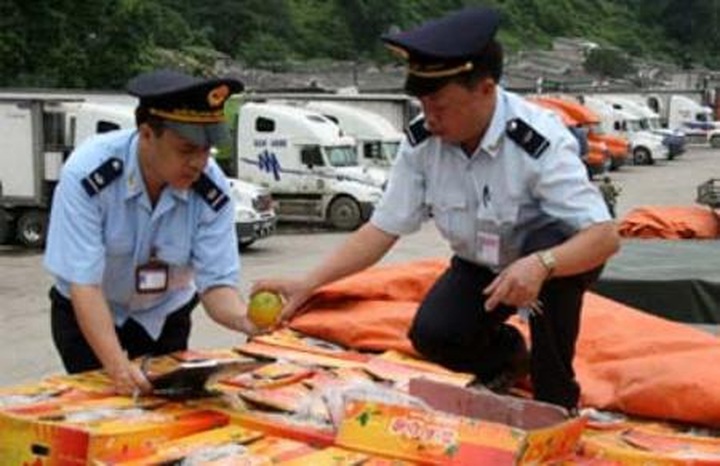
Only 10% of imported fruits and vegetables inspected
Many, however, remain worried about the department's inspection policies.
Lack of funding and human resources
Hong admitted that the state budget for examination of imported fruits and vegetables is modest. The figure was around VND7.5 billion (USD353,107) in 2012, which fell to VND2.5 billion (USD117,702) in 2013, and VND2 billion (USD94,161) in 2014.
“The lack of resources has forced us to limit our inspections to fresh vegetables and fruits because of the large volume and high costs of inspecting other goods such as dried beans. It would be great to double our funding to around VND5 billion (USD235,404). That way we could inspect all imported products,” he stated.
The process also suffers from a lack of modern equipment and facilities at the borders. Because there are no labs located at border crossing points, vegetable and fruit samples must be sent to the labs in Hanoi or HCM City, and results take from three to five days to come back.
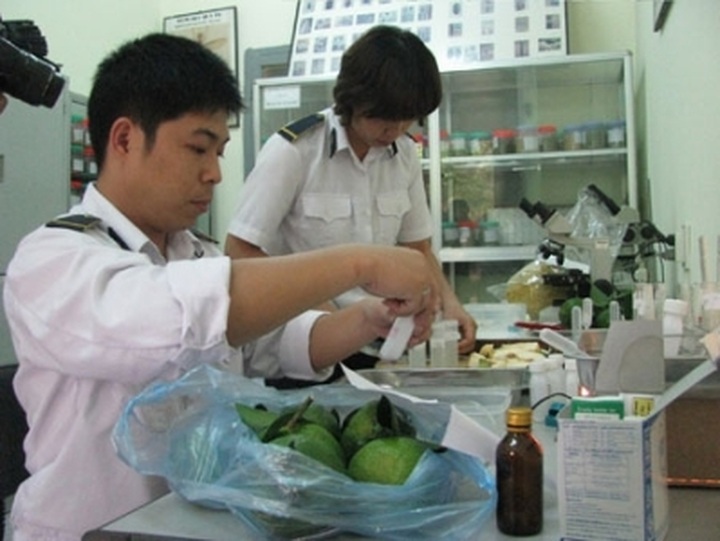
Borders lack of standard labs
The lack of funding also means that there is not enough to purchase new equipment or train staff thoroughly. Recently, Cao Duc Phat, minister of Agriculture and Rural Development (MARD), approved a plan to invest VND33 billion (USD1.55 million) in purchasing equipment and machines at labs and training staff in 2015.
“We really lack a skilled workforce capable of conducting reliable inspections. Due to the limited targets for hiring state employees, the current staff are compelled to work overtime and on weekends and holidays,” he added.