 |
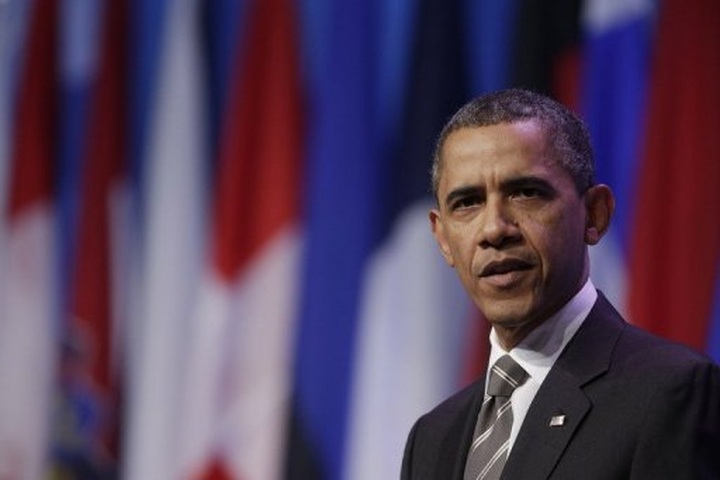
| US President Barack Obama, pictured in Chicago, called Monday for a "more effective coordination" among eurozone nations as he admitted that the Greek debt crisis has an impact on the United States. |
"What is most important is that Europe recognizes this euro project involves more than a currency, it means that there must be more effective coordination" on fiscal and growth policies, Obama said.
"We have offered to be there for consultation, to provide any technical assistance and work through some of these ideas in terms of how we can stabilize the markets there," he said.
Obama was speaking after a two-day NATO summit in Chicago that followed G8 talks at Camp David focused on the eurozone crisis that has threatened to unravel the 17-nation monetary union.
G8 leaders declared at the weekend their desire to see Greece remain in the eurozone as the nation heads towards fresh elections on June 17 after inconclusive polls last week handed big gains to anti-bailout parties.
The political uncertainty in Greece has raised fears that the country could be forced to abandon the euro after a crisis that has festered for more than two years.
With the economy dominating the US presidential election, Obama has pressed Europeans to quickly implement growth policies after two years of a German-led austerity drive that some analysts say is choking the European economy.
"I'm not going to speculate on what happens if the Greeks choose to exit (the eurozone), because they've got an election and this is going to be an important debate inside of Greece," Obama said.
"And I think it's important for Greece as a democracy to work through what their options are in a time of great difficulty," he said.
"What happens in Greece has an impact here in the United States," Obama said, noting that businesses are more hesitant to invest in Europe if the situation in Europe remains uncertain.
Obama called on Europeans to put in place proper firewalls to protect vulnerable nations, recapitalize banks to restore investor confidence and ensure fiscal discipline is accompanied by a growth strategy.
"The good news was you saw a consensus across the board," from Socialist French President Francois Hollande to German Chancellor Angela Merkel, that this "balanced approach is what's needed right now."
Hollande, who won backing for his growth-first agenda during his US tour, indicated that he would not be "looking for a fight" at the informal dinner of EU leaders in Brussels on Wednesday.
"Everything will be on the table," he said. "We will be able to discuss every proposal that each and every one of us can bring regarding growth, and any instrument, any angle, any idea are welcome," he said.
Hollande indicated he would want to discuss the idea of joint eurozone bonds, a controversial proposal opposed by Merkel.
British Prime Minister David Cameron, whose country is part of the EU but outside the eurozone, also waded into the debate at the end of the two-day NATO summit, saying the crisis affects his country too.
"My judgment is that staying silent on the problems would actually be more dangerous than speaking out, because we need these issues to be resolved," Cameron told reporters.
While he commended the eurozone for having taken some steps to tame the situation, he said: "The truth is that we still haven't done enough to decisively resolve the crisis."
Cameron called for a "more active" role from the European Central Bank, despite German opposition to printing money, and the creation of joint eurozone bonds.
"These issues have to be resolved and in my view, the swifter and the more effectively and more comprehensively they can be resolved, the faster the eurozone will be able to return to growth," he said.