Due to increasing energy demand, Vietnam is trying to find new energy sources but the process is not easy as they have certain disadvantages.
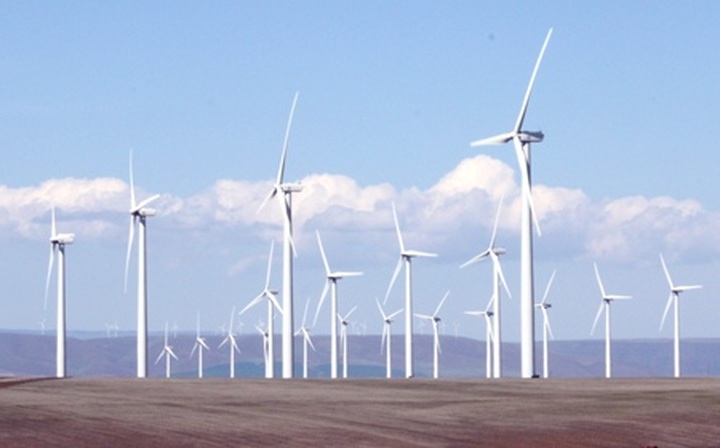
Vietnam boasts a great potential for wind energy development
Dr. Ngo Duc Lam, an energy expert, said Vietnam’s total energy capacity had reached 25,100 MW last year, including 45.5% from hydropower, 33.6% from gas-fuelled power sources, 15.3% from coal-fired power sources and 1.4% from diesel-fuelled sources.
The country’s basic energy demand is forecast to reach 250 million tonnes of oil equivalent by 2030, a five-fold increase compared to the figure of 2009.
All major hydropower sources would be put into operation in the next few years and fossil-fuelled energy sources are declining, forcing the country to import coal for power production since 2011, instead of in 2015 as earlier forecast.
In order to increase domestic power supply, the country has imported electricity from China. However, this is not a reliable source as Chinese partners have recently sharply increased prices to 7 US cents per kWh from an earlier 4.2 or 4.5 US cents.
“Vietnam is trying to develop nuclear power sources, which is still causing public concern over safety. However, we’ve yet to work out a better solution to increase power supply. The country expects that nuclear power would contribute 20% to the national total power capacity by 2020,” Lam said.
According to him, nuclear power costs USD3,000 per kWh to produce, compared to USD2,000 per kWh of wind power.
Vietnam is speeding up the implementation of the first nuclear power projects with two plants that have a combined capacity of 4,000 MW. It has signed a cooperation agreement with Russian partners to build the first plant at a cost of from USD6,500-USD7,000 per kWh, promising high safety.
“Nuclear incidents like in Chernobyl and Fukushima are a result of backward technologies which have been used for 40 years. However, nothing is absolutely safety, especially in cases of tsunamis or earthquakes. Vietnam has invited nuclear experts from North Korea, Russia, Japan and the US to provide nuclear safety training for Vietnamese officials and staff,” he emphasised.
Even though the further development of coal-fired power sources would mean that country wpuld be more dependent on imported coal sources in the future and produce increased greenhouse emissions, Vietnam still has no other better choices, he admitted.
The country is trying to set up renewable energy sources. Renewable energy sources currently account for only 3.5% of the country’s total power capacity and the rate is expected to increase to from 6%-6.5% by 2020.
Despite great potential for renewable energy in Vietnam, such sources of energy are not really stable and investment costs are a considerable concern. Prices of hydropower and thermal power are from 4-5 US cents per kWh but the price could be even ten folds higher for solar power.
“Among renewable energy sources in Vietnam, wind power seems to be the most suitable and feasible due to costs, which are the same as investment costs for small-sized hydropower. However, wind energy in Vietnam is rather limited, estimated at between 5,000 MW and 6,000 MW, mainly in the central coastal provinces of Binh Thuan, Phu Yen, Ninh Thuan and Binh Dinh,” he noted.

Energy experts at a recent seminar on green energy in Hanoi
Priority to energy efficiency and green energy development
Lam said that Vietnam can reduce current total power consumption by from 15%-20% if it successfully applies energy saving measures. This could save the costs for the production of one or two new major power sources.
“Vietnam is among countries that have the highest rates of power leakage due to the use of backward technologies. Energy consumption in the country’s industry sector is from 2-2.5 times higher than other countries in the world,” he emphasised.
Even though the country has passed the Law on Energy Saving and Efficiency, the enforcement has been inefficient due the lack of proper attention to raising people’s awareness of the issue, he commented.
Vu Chi Thanh, Director of the Hanoi-based FPT Polytechnic, said Vietnam should learn from several initiatives abroad to boost energy saving and efficiency as well as foster the development of green energy sources.
“We should pursue sustainable development that meets the needs of present generations without compromising the ability of future generations to meet their own needs,” he added.
Pham Ngoc Thang, head of iSave project, who won the first prize for Green Initiative in 2009, said, “After a period of time working in the field of communication on energy saving I see that people still lacks awareness on the issue. It’s not easy to change common people’s mind and behaviour but it’s even more difficult to persuade the better-off groups to save energy as electricity bills are just a minor part of their monthly expenses.”