Modern tools have made it easier for the conservation and promotion of local cultural assets, helping build a dynamic and competitive cultural industry.
Digital cultural experiences
The Nghe An-Xo Viet Nghe Tinh Museum exemplifies the shift from traditional displays to a modern digital destination. By combining conventional exhibitions with multimedia and interactive systems, the museum has created a more compelling visitor experience and enhanced the interpretation of local heritage.
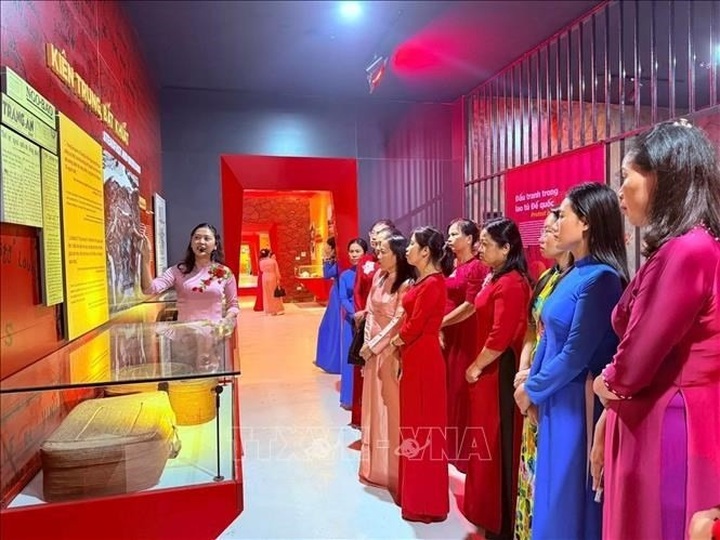
The application of digital technology is an important step in heritage conservation in Nghe An. (Photo: VNA)
Its 3D digital gallery “Land and People of Nghe An” offers virtual displays, interactive tours, automated narration and VR experiences, allowing visitors to explore historic spaces, including those no longer accessible. AI-assisted information systems provide automatic explanations, while 3D-mapped national treasures can be rotated and viewed from every angle. Multi-point interactive kiosks enrich access to cultural, historical and geographical data.
In October 2025, the museum launched “Lua Xo Viet” (Soviet flame), a Saturday night digital show using music and laser effects to recreate the 1930-1931 Xo Viet movement. According to Acting Director Le Thi Hien, digital transformation has sharply increased visitor numbers, especially among young people.
Beyond museums, local authorities, heritage managers and volunteers are creating digital replicas of ancient communal houses, temples and ancestral halls using drones and handheld 3D scanners, safeguarding them against deterioration. Intangible heritage such as Vi-Giam folk singing, along with traditional crafts and Han-Nom archives is being documented in high quality to form a digital library supporting research and public access.
Many communes, including Tan Ky and Giai Xuan, have digitised all recognised sites and installed QR codes for self-guided tours. Chairman of the Giai Xuan People's Committee Bui Duc Hong noted that visitors can instantly access videos, high-resolution images and bilingual multimedia content, thanks in part to strong Youth Union participation.
Bringing heritage closer to the community
Digital technology is becoming a catalyst for connecting heritage with the community, particularly young people. The cultural sector aims to develop a digital heritage database aligned with national systems. Heritage practitioners are receiving training to document performances using simple digital tools, with IT students encouraged to join digitisation projects.
Nghe An is proposing a unique digital identifier for each heritage asset to improve management and promotion, while prioritising VR/AR and 3D scanning for the most significant or vulnerable sites. Digitisation, said head of the provincial Heritage Management Board Tran Thi Kim Phuong, both preserves ancestral values and supports sustainable cultural tourism.
Schools are increasingly involving students in heritage projects using digital tools as short videos, podcasts and infographics. Cultural fanpages and YouTube channels are also boosting the visibility of festivals, folk singing and local cuisine.
The province is investing in skilled personnel across heritage and technology, training museum staff and mobilising enterprises and international partners to support digitisation. In Nghe An, digital heritage preservation is becoming a living resource for research, education and tourism, supported by closer cooperation between the State, communities and technology firms.