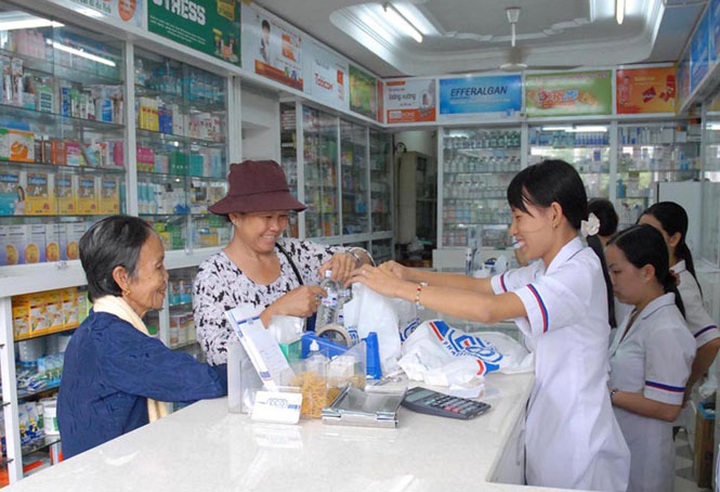
illustrative image
According to the Drug Administration of Vietnam, under the Ministry of Health, the usage of domestically-made drugs at medical facilities has improved from 46.62% in 2013 to 63.53% in 2018. Domestic production consists of mostly generic drugs produced for domestic consumption and outsourcing for foreign enterprises. However, the reality in many central-level hospitals in big cities is not very positive.
Thu Hang from Dong Da District, Hanoi, said her prescription cost VND700,000 (USD30) because four out of five drugs were imported. Domestically-made drugs would only cost VND200,000 but Hang said she'd rather pay more money to get better quicker.
Both patients and doctors prefer imported drugs than locally-made drugs. Deputy Minister of Health Truong Quoc Cuong said in central hospitals including Bach Mai and Vietnam-Germany hospitals, the usage of locally-made drugs is below 10%. Moreover, those hospitals often use special drugs for anaesthesia, cardiovascular, and cancer treatment which domestic companies have not been able to make.
Doan Dinh Duy Khuong, director of DHG Pharmaceutical JSC said in order to make it into central hospitals where patients in critical conditions are being treated, locals firms must aim for higher standards, better-quality materials and to ensure that their management system works efficiently.
The campaign to promote greater use of domestic product’s goal is to have a 22% rate of domestically-made drug usage in central hospitals in 2020.
According to Cuong, in order to achieve the goal, they will need co-operation from many agencies and have simultaneous solutions to support firms and encourage people to buy local drugs. The usage of local drugs should be included in the criteria for assessing hospital quality annually.
He went on to say that they must have policies to attract foreign pharmacies to build plants in Vietnam.
However, more importantly, local firms must work harder to improve drug quality at suitable prices.