According to the Vietnam Maritime and Inland Waterways Administration, the Vietnam Maritime Search and Rescue Coordination Centre (VMRCC), is urgently reviewing and contacting vessels and crew members operating or planning to transit the Strait of Hormuz and surrounding waters, an area considered high risk amid complex military developments in the region.
Authorities confirmed that six Vietnamese vessels are currently active in the area. Shipowners and captains have been urged to regularly update maritime security information from competent agencies, strictly follow warnings issued by coastal states and affected regions, maintain proper watchkeeping, keep automatic identification systems active, and fully implement ship security plans.
Vessels have also been advised to proactively adjust routes to avoid dangerous zones and immediately report any unusual incidents at sea to ensure the safety of crew and assets.
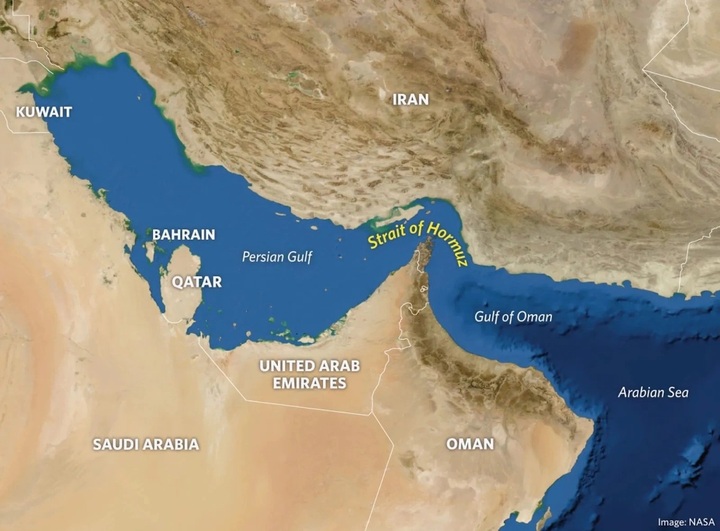
On March 3, Reuters cited Iranian media reports quoting military officials as saying the Strait of Hormuz had been closed and that naval forces were prepared to open fire on any vessel attempting to pass. The strait, located between Iran and Oman, connects the Gulf with the Gulf of Oman and the Arabian Sea. At its narrowest point, it is about 33 km wide, while each shipping lane is roughly 3 km across.
Data from energy analytics firm Vortexa shows that in 2025, more than 20 million barrels of crude oil, condensate and fuel pass through the route each day on average. Major OPEC exporters including Saudi Arabia, Iran, United Arab Emirates, Kuwait and Iraq depend heavily on the corridor to ship oil to international markets, particularly in Asia. Qatar, one of the world’s largest liquefied natural gas exporters, also transports most of its LNG through the strait.
For Vietnam’s shipping sector, the Middle East remains an important trade corridor. Cargo vessels sailing from Vietnam to ports such as Jebel Ali in the United Arab Emirates typically pass through the Strait of Malacca, the Indian Ocean and the Red Sea. However, amid tensions in the Middle East and the Red Sea, many ships may have to reroute via the Cape of Good Hope in South Africa instead of transiting the Suez Canal, significantly extending voyage times.
In addition to Vietnamese flagged ships, many Vietnamese seafarers work aboard international oil tankers and container ships frequently operating in Middle Eastern waters, especially near the Strait of Hormuz and Oman.
On March 2, the Department of Overseas Labour Management under the Ministry of Home Affairs issued a directive to recruitment agencies to temporarily suspend sending workers to the Middle East from March 1 until the situation stabilises.
On the same day, VMRCC received information from Phuong Dong Oil and Gas Transport Co Ltd, owner of the Panama flagged vessel Sand, regarding a maritime rescue that took place on March 1 off the coast of Muscat, Oman. The Sand rescued 21 crew members from the distressed vessel Mkd Vyom, registered in the Marshall Islands.
Those rescued included one Ukrainian national, four Bangladeshi nationals and 16 Indian nationals. Following instructions from the Vietnam Maritime and Inland Waterways Administration, VMRCC contacted the Sand and its owner to verify the situation and confirmed that the vessel was safe and the rescued crew members were in stable condition.