Rhino fossils discovered at Phong Nha-Ke Bang National Park
Scientists have found three items of rhino fossil dating back between 30,000 and 50,000 years at a cave of the central province of Quang Binh’s Phong Nha-Ke Bang National Park.
Scientists have found three items of rhino fossil dating back between 30,000 and 50,000 years at a cave of the central province of Quang Binh’s Phong Nha-Ke Bang National Park.
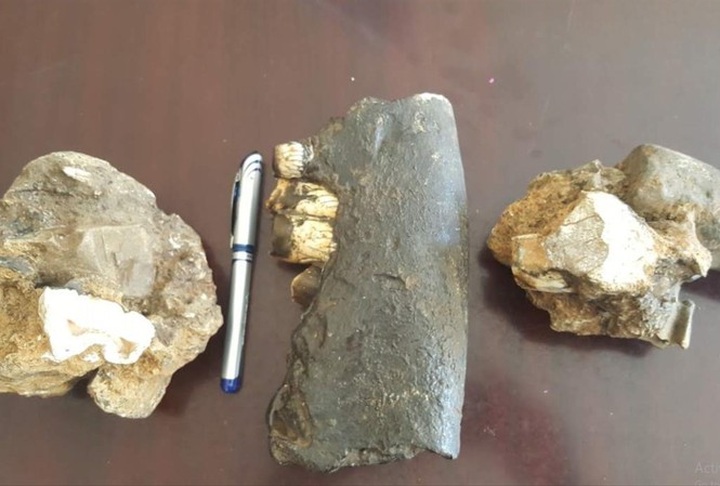
The three items of rhino fossil found at Phong Nha-Ke Bang National Park
Dinh Huy Tri, deputy director of the park, said the fossils were detected at the cave in Thuong Hoa Commune which is around 20 metres long and 2 metres wide.
The items consist of two big animal teeth and a part of a jawbone with four teeth and three alveoli.
Tri has asked the Vietnamese Archaeological Association to examine the fossils’ identification and dating.
According to the association, the three items are jaw teeth of Rhinoceros siensis, a rhino species of the Rhinocerotidae family and the Pesissodactyla order.
A resident of Khanh Hoa Province has voluntarily handed over a rare Temminck’s tragopan to authorities, who later released the bird into its natural...
Hanoi authorities have been told to urgently review streets and residential areas with dense milk flower trees and propose relocating some of them to...
Hanoi authorities are considering relocating some milk flower trees from densely populated areas after residents complained that their scent becomes...
Hanoi is reviewing a comprehensive redevelopment plan for Thu Le Park that could affect about 37 households, or roughly 150 people, living along Kim...
Hanoi aims to increase its urban green space to more than 10 sq metres per person by 2030, while reorganising street trees to create a more coherent...
A red-shanked douc langur has delighted viewers after a video showed it checking the road before signalling its family to cross on Son Tra Peninsula...
HCM City authorities have ordered a review of frequently flooded areas to identify causes and develop solutions as heavy rain and high tides threaten...