
The newly cleared sites are located in wards and communes including Binh Hung Hoa, An Lac, Phu Tho Hoa, Phu Thanh, Tan Hung, Nha Be, Linh Xuan, Hiep Binh, Thu Duc and Cat Lai.
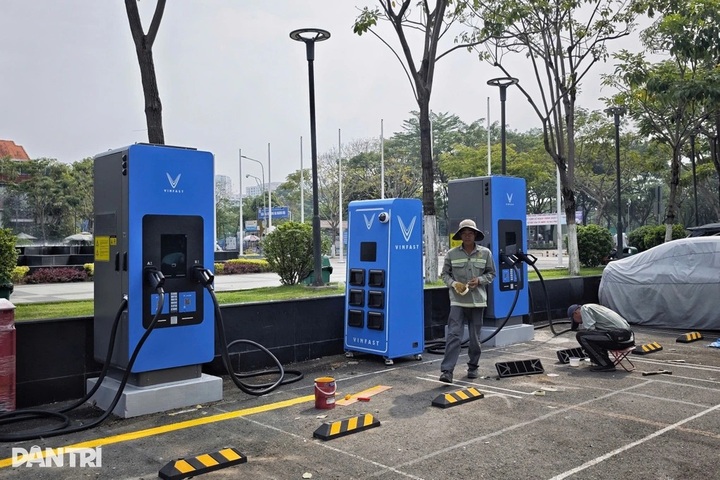
The Department of Construction said companies must obtain temporary pavement-use permits and fulfil all financial obligations. Separate construction permits are required for any pavement works.
The city has tasked its Transport and Technical Infrastructure Management Centre with reviewing road infrastructure, proposing further suitable locations and addressing implementation issues.
In early February, authorities approved an initial 52 sites, mainly in Sai Gon, Hoa Hung, Tan Hoa, Vuon Lai, Binh Hung Hoa, Dien Hong, An Lac and Tan Tao.
Two companies, Great Wealth Trading and Services Co., Ltd. and V-Green Global Charging Station Development JSC, plan to install 20,000 battery-swapping cabinets in 2026 to support the shift to electric mobility.
The city requires all cabinets to be interoperable and technically compatible with multiple motorbike brands. Charging compartments must accommodate different battery sizes or adopt open-connection protocols to prevent infrastructure monopolies.
From 2029, Ho Chi Minh City aims to convert 100 per cent of ride-hailing and delivery motorbikes, estimated at about 400,000 vehicles, to electric or other green energy.
By 2030, the city expects around 1.2 million electric motorbikes on its roads and will need more than 25,000 public charging pillars and battery-swapping cabinets to meet demand.