
According to Vu Dang Dinh, Chief of the Office of the Hanoi People’s Committee, the city’s air pollution over the past two weeks has been mainly due to exhaust fumes from transport vehicles, coal and wood burning, dust from construction sites and vehicles carrying building materials, waste burning, smoke from production facilities in Hanoi and nearby provinces, and impact of the change of seasons.
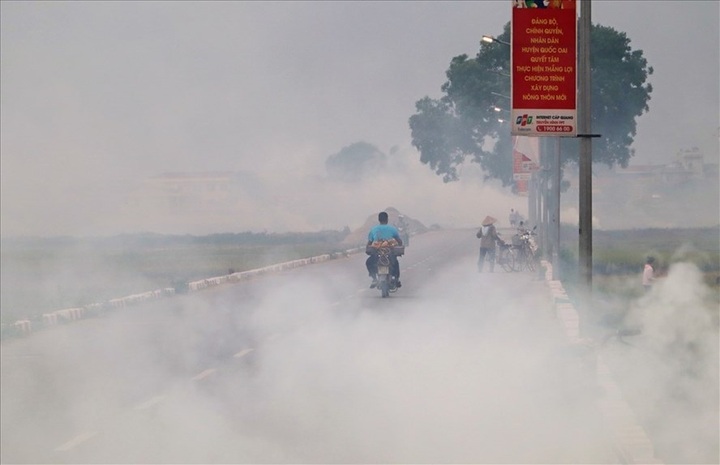
Air pollution worsens Hanoi's air pollution
Currently, the city is home to 700,000 car and 5 million motorbikes. Meanwhile, around 528 tonnes of coal are burnt in the city daily.
The Hanoi Department of Natural Resources and Environment reported that the city produces around one million tonnes of straw and agricultural by-products per year, the remains of which are often burnt.
Poor treatment and collection of waste and wastewater along with untreated water pollution in some lakes is also among the causes.
The capital city has conducted many measures to improve the situation, including installing more monitoring stations; using vehicles to collect waste and clean dust instead of doing manually; pond and lake pollution treatment; mobilising people to stop using coal-fuelled stoves; and building waste-to-energy plants.
Other solutions are involved in boosting communications to raise public awareness of air quality, implementing more tree planting programmes, and dissuading farmers from the long-standing practice of burning straw.
The city has also enhanced the management of road vehicles to reduce traffic congestion and pollution while promoting the use of public transport. Construction sites have been requested to be covered to mitigate environmental pollution.
It is forecast that rains to come on October 3 will help ease air quality pollution in Hanoi.


