Under instructions from Hanoi Vice Chairman Truong Viet Dung, the city’s Department of Construction has been tasked with finalising a metro investment report and establishing a dedicated task force by May 19.
The report will be submitted to the prime minister for feedback on the investment and construction roadmap for Hanoi’s urban railway system.
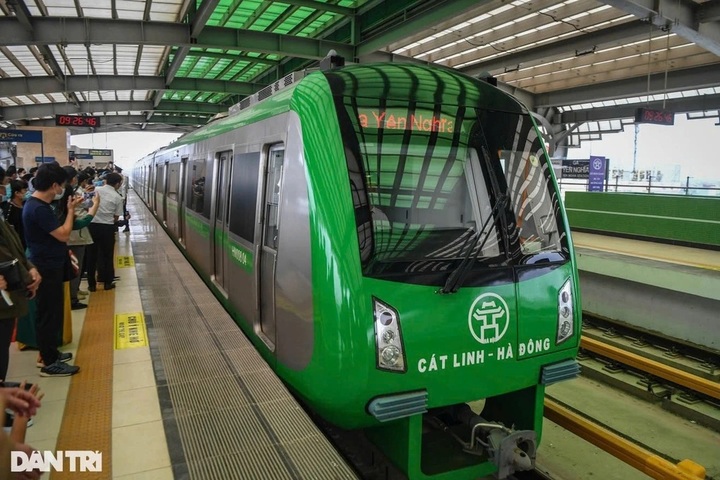
Authorities said the proposal would be linked to railway industry development planning and include mechanisms to mobilise investment from domestic and foreign businesses.
Under the latest plan, Hanoi aims to develop 18 metro lines with a combined length of nearly 1,000 kilometres and estimated total investment exceeding USD 100 billion.
The capital’s urban railway master plan has been revised several times in line with urban expansion. A 2016 plan included 10 metro lines totalling nearly 398 kilometres and three monorail routes spanning about 44 kilometres.
Under Hanoi’s revised 2024 master plan, the network was expanded to 14 lines covering 616.9 kilometres before being further extended to 18 routes under the latest proposal.
The metro network is expected to serve as the backbone of Hanoi’s public transport system, supporting a multi-centre urban development model and transit-oriented development (TOD).
Under the proposed schedule, about 500 km of metro lines are expected to be completed between 2026 and 2035, including priority projects such as Line 1 linking Noi Bai International Airport and Ngoc Hoi, and Metro Line 6.
Another 383 kilometres of lines are planned for completion during 2036-2045, with the remaining 96 kilometres scheduled for the 2046-2065 period.
Total investment for the network is estimated at between USD 109.7 billion and USD 137 billion, depending on construction options.
Authorities estimate the 2026-2035 phase alone will require USD 60-70 billion, leaving a funding gap of between USD 18 billion and USD 27.6 billion.