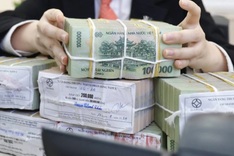
Indirect foreign investors have been more hesitant to invest in Vietnam since the beginning of this year, experts said.

Foreign investment in Vietnam slows down
“Investment flow to Vietnam seems to be going down,” said To Hai, General Director of Viet Capital Securities Company.
He admitted that most foreign investors have been unsuccessful in their Vietnamese ventures.
According to Nguyen Son, head of the State Securities Commission (SSC) of Vietnam’s Market Development Department, real estate projects, mineral industry and banks are currently in desperate need of large amounts of capital.
Vietnam is facing difficulties in finding foreign capital for investment projects due to inefficient operations. This may be the case through the end of 2013, he added.
He emphasised the necessity to regain the flow of foreign investment, which could foster Vietnam’s economic growth.
Part of the reason is also the global economic downturn, but domestic obstacles also play a major role, he said. One of the major examples is the large percentage of bad debt in the banking system.
“Bad debts must be blamed for hindering the rebounding in the financial market and capital flow,” said Citibank Vietnam General Detector Brett Krause.
Brett assessed that Vietnamese people still lack confidence in the banking sector.
“Even though Vietnam’s banks are triple against Thailand and double against the Philippines, only one fourth of the country’s population has a bank account. This has led to difficulties for those who are responsible for supervising the implementation of monetary policies. The development of competent banks may foster people’s confidence,” he shared.
Meanwhile, Sanjay Kalra, senior resident representative of the International Monetary Fund (IMF) in Vietnam, said it is unacceptable that a bank files bankruptcy because of bad debts. In order to improve the situation, it’s essential to change people’s way of thinking.
He suggested that bad debts should be put in the context of the national economy. In some cases, bad debts must be conveyed to an asset management company but banks must be brave enough to declare their failure.
Regulations on monetary management must be intensified and more strictly implemented. Banks need to follow international norms when making their financial reports as well, he added.
Many other experts proposed increasing foreign ownership in domestic banks.
Inadequacies in the legal system have been another barrier to foreign investment in Vietnam, including cumbersome procedures, the lack of transparency, and a lack of international arbitrary systems.
“Even though Vietnam has renovated its legal system, the legal understanding and implementation at local level is still limited, causing difficulties for foreign investors,” said Seck Yee Chung from Baker & Mckenzie Law Company.
Many enterprises claimed that they are in desperate need of capital to maintain their operations. Nguyen Son responded that derivative securities products, such as Exchange-traded fund or ETF, global depositary receipt or GDR, and pension fund are taking shape in Vietnam.
The SSC said it would have full new accounting and auditing criteria that would be on par with international norms by the end of 2013. This, he said, would lead to a basis for international financial reports, the current fallibility of which are hindering Vietnamese enterprises from getting access to international capital.