 |
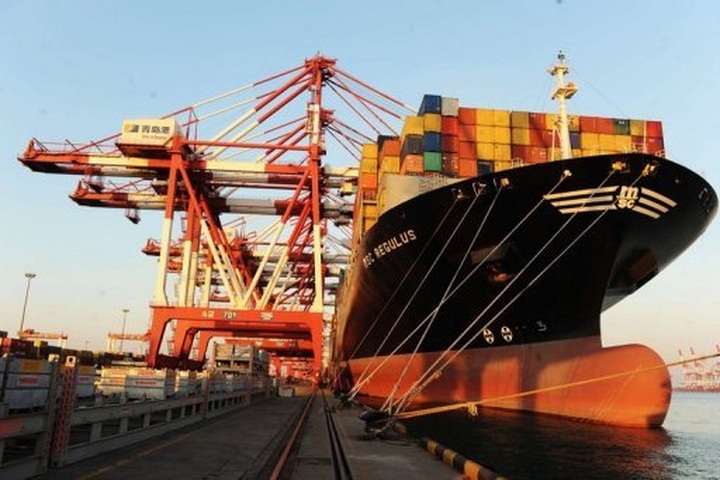
| A cargo ship is berthed at the port of Qingdao in China's Shandong province on November 7, 2012 |
The idea of a trilateral FTA has been on the table for decades, but diplomats say China is now pushing especially hard for a pact, in part as a counter to US initiatives in the Asia region.
Washington is leading negotiations on a Trans-Pacific Partnership (TPP) free trade pact that some see as part of the so-called US "pivot" -- aimed at reaffirming the US role in Asia in the face of China's economic rise.
The TPP talks currently involve Australia, Brunei, Canada, Chile, Malaysia, Mexico, New Zealand, Peru, Singapore, the United States and Vietnam.
While China is conspicuously absent, new Japanese Prime Minister Shinzo Abe announced earlier this month Japan's decision to participate in the negotiations.
The initial round of trilateral FTA talks is being held in Seoul, after which the negotiations will move to China followed by a third round in Japan, South Korean trade officials said.
China, Japan and South Korea are now Asia's largest, second-largest and fourth-largest economies, and together account for about 20 percent of global gross domestic product (GDP).
Trade volume among the three nations amounted to $5.32 trillion in 2010.
Among other issues, the discussions are expected to hit opposition from Japanese farmers since a trade pact could allow cheaper agricultural products such as Chinese rice into Japan.
The first round of talks between deputy trade ministers in Seoul will last three days and "will involve no practical negotiations", a South Korean official said.
"It will cover broad matters such as the scope, agenda and procedure for further negotiations," the official said.