
Vietnam's Customs Department has granted or extended priority status to seven companies, bringing the total number of firms covered by the scheme to 74, customs officials said at a ceremony in Hanoi on September 29.
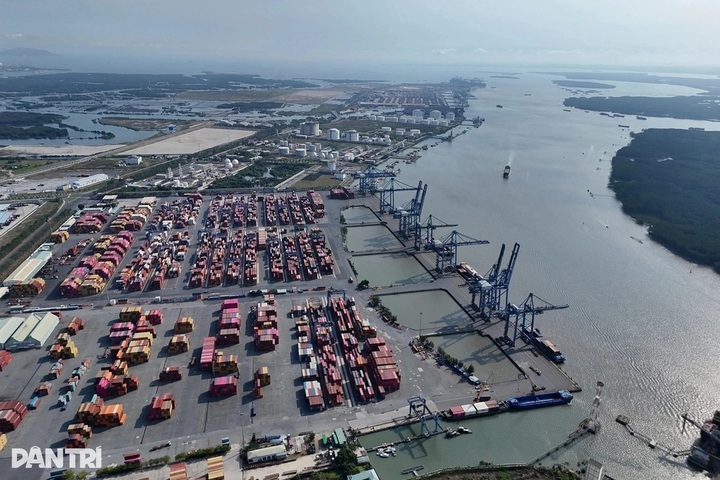
A seaport in Ho Chi Minh City (Photo: Ngoc Tan).
The event marked the 15th anniversary of Vietnam's Priority Enterprise Programme, with three companies newly recognised and four receiving extensions of their priority status.
Speaking at the ceremony, Tran Duc Hung, deputy director of the Customs Department, said the programme had become an important part of customs reform over the past 15 years, helping shift the agency's approach from direct inspection towards enterprise management, compliance management and risk management.
The programme began with nine recognised companies in 2011. By September 2026, the number had risen to 74, including 10 businesses operating in high-tech and semiconductor sectors.
Although priority enterprises account for only a small share of Vietnam's import-export community, they have contributed about one-third of the country's total trade turnover on average.
Between 2022 and 2025, their annual import and export turnover consistently exceeded USD 230 billion, accounting for about 28-34 per cent of the national total. In 2025, the figure reached approximately USD 256.63 billion, while in the first six months of 2026 it stood at about USD 164.52 billion, equivalent to around 30 per cent of the country's total trade turnover.
Hung said he expected priority FDI enterprises to continue playing a leading role in technology transfer, optimising global supply chains and helping domestic suppliers become more deeply integrated into international value networks.
Under the scheme, priority enterprises receive a range of customs facilitation measures covering customs procedures, inspections, tax administration and post-clearance audits. These measures can help businesses reduce compliance time and costs while giving them greater flexibility in import and export operations.
In return, companies must maintain high levels of legal compliance, effective internal controls, risk-management systems and supply-chain security standards. Priority status and its renewal are granted following substantive assessments of a company's management capacity and compliance record.
The Customs Department said the programme's next phase would focus not simply on increasing the number of recognised companies, but on building a community of businesses with strong compliance records, modern management capabilities and greater participation in global supply chains.
The department plans to continue improving the legal framework and selectively expand the programme, with greater attention to Vietnamese companies with strong compliance capabilities and businesses operating in high-tech, strategic technology, semiconductor and digital technology sectors.
It will also support companies in strengthening internal controls and risk management, applying information technology and improving supply-chain security.
Another priority will be to strengthen data- and risk-based management of priority enterprises, gradually automating the assessment, recognition and renewal processes.
“This approach aims to increase transparency, reduce processing times and allow customs authorities to focus resources on areas carrying higher risks,” a Customs Department representative said.


