Climate change is estimated to have already cost Vietnam 5 percent of its GDP, equivalent to USD15 billion annually, and the impacts could be more serious in the coming years, a newly released report claims.
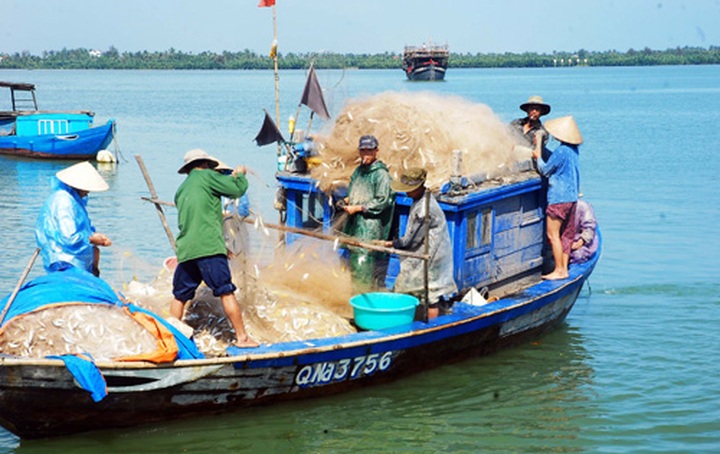
Fishermen in central Quang Nam Province
The data was included in the study Climate Vulnerability Monitor 2012 which was released in Hanoi on January 10 by representative of Climate Change Working Group, on behalf of DARA International.
According to the study, Vietnam tops the list of countries suffering from the impact of climate change on the fisheries industry. It’s estimated the sector lost USD1.5 billion in 2010. The figure is forecast to reach as much as USD25 billion by 2030.
“If no effective solutions are applied, climate change could have greater impacts on the country’s economy, estimated at around 11% of its GDP by 2030,” said Nguyen Quang Thanh, an official from Centre for Research Support and Development of Culture, and the centre of Live and Learn for Environment and Community (Live & Learn).
Vietnam is followed by China with an estimated loss of USD15 billion in the fisheries industry in 2010 and USD15 billion by 2030; and Peru with a loss of USD1.25 billion in 2010 and USD15 billion in 2030.
Thailand’s fisheries industry lost USD700 million in 2010 and may lose USD8.5 billion by 2030 while Indonesia incurred a loss of USD650 million in 2010 and the loss may reach USD7.75 billion by 2030, the report said.
The situation is said to be results of the vulnerability of tropical coastal areas and unsustainable fish reserve management. This means it will be necessity to build capacity to reverse or minimise the effects of climate change on the industry via improving fisheries management.
The working group undertook field research in the Mekong Delta province of Ben Tre.
While such industries need large amounts of capital, it also faces the largest risk due to serious impact of climate change.
There is currently a lack of regulations on minimising fishing and protecting fish resources.
Experts said that water temperature and pH levels are basic conditions for fish or oyster raising ponds and could decide how serious a disease outbreak could be. However, there has been still a lack of suitable guidance for farmers during severe weather to prevent potential losses.
They added that the quality of breeding animals also made a difference. In order to improve the situation, it will be necessary for strict regulations to be introduced to ensure the highest quality of breeding animals possible are used and that help is provided to farmers to access higher standard breeding stocks.