
The State Capital Investment Corporation (SCIC) has earned trillions of VND via bank deposits, accounting for 40% of its revenues in 2012.
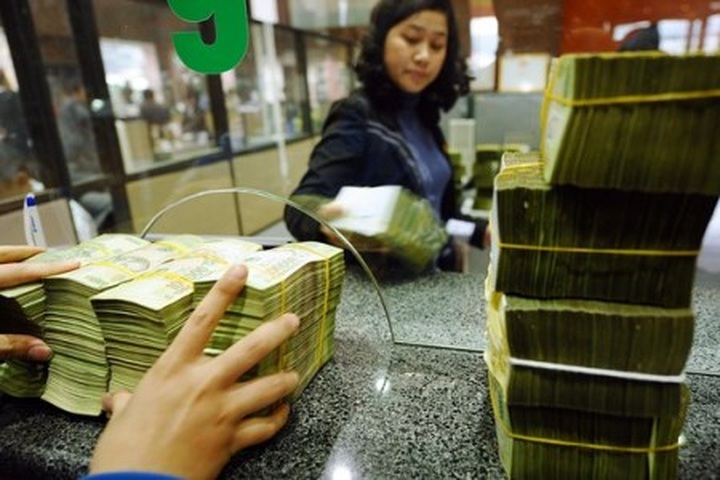
SCIC’s primary objectives are to represent the interest of state capital in enterprises and invest in key sectors and essential industries in order to strengthen the dominant role of the state sector. However SCIC seems to have earned more through savings.
According to SCIC’s report, in 2012, out of its total revenues of VND3.888 trillion (USD185.7 million), VND2.151 trillion (USD102.4 million), or 55%, were derived from dividends. Interest from the corporation’s deposits accounted for up to 40% of its revenues in 2012. Meanwhile, the sale of state capital, SCIC’s main business area, accounted for just 4% of its revenues this year.
SCIC revenues in 2012 were directly affected by the slump in deposit interest rates, which went from 14% in 2011 to only 8%, the report said. Lower interest rates reduced SCIC’s revenue to VND1.5 trillion (USD71.4 million) from deposits. The interest suggests that SCIC has deposited as much as VND19.6 trillion (USD933 million), far higher than the 2011 figures of VND10.5 trillion (USD476.2 million) in deposits.
Explaining its dividend revenues, which were higher than the annual target, the SCIC said that initially a number of businesses did not have plan for dividend payout or just planned to offer a low payout rate, but in fact, later they changed their policies and paid out at a higher rate. For example, the Germadept Joint Stock Company, which initially did not have any plans for a dividend payout, later spent VND19 billion for this; Bao Minh Insurance JS company set a target of a dividend payout of VND19 billion, but later increased it to VND45 billion (USD2.14 million).
However, revenues from selling state capital reached only VND170 billion (USD8.1 million) in 2012, or 4% of the corporation’s total revenues in the year, fulfilling just 25% of the year’s target.
The low revenues from selling state capital were attributed to low liquidity in the stock market in 2012, causing difficulties for selling listed companies in particularly and selling capital in general.
Moreover, many companies in which SCIC wanted to sell their stake were small and medium-sized which have low operational efficiency. Some of them face lawsuits.
In 2012 the company disbursed VND1.25 trillion (USD59.5 million) for investment, more than VND1 trillion (USD47.6 million) of which went to increase capital at the debt-ridden Vietnam Construction and Import – Export JSC (Vinaconex).
The disbursement has become controversial as it remains to be seen whether SCIC can recoup the investment given the troubled financial state of Vinaconex.
This year, SCIC expects to raise its revenues to VND3.49 trillion (USD166 million), up 8.9% with the majority from selling state capital. Meanwhile, revenues from dividends and financial activities could decline 15.2% and 23.5% against 2012 respectively.
Concerns
Senior economist Pham Chi Lan said depositing funds is the easiest and safest investment but does not contribute much to serving the common interests and urged SCIC to be transparent and publicise its investments.
“The SCIC is actually not as helpful as we desire, it should be separated from the Ministry of Finance and be supervised as an exchange-listed company” and “return to the initial model of the Singaporean Temasek,” Mrs. Lan said.
Economist Le Dang Doanh said SCIC used state capital as deposits and then used the interest to lend to enterprises, which would cause difficulties for small businesses. Therefore, SCIC’s operation should be reconsidered.
A representative from the SCIC said due to the public concern, the corporation would send its report to management to explain the revenues from bank deposits.
Nguyen Van Phuc, Deputy Head of the National Assembly Economics Committee, said the committee was investigating the case.


