From April 2007, the banking industry of Vietnam has turned to a new phase when the nation joined fully WTO and more international financial institutions came to explore opportunities to become strategic shareholders at local banks. Foreign banks find ways to partner with local banks through investment funds for multi purposes. Beside financial benefits, these foreign partners also aim at penetrating into the local distribution network which they hardly build overnight. They even compete with their own local partners by opening their wholly-owned foreign bank branches. With these two legs, it was believed that, back in 5 years time, the foreign banks are likely to surpass their local partners one day.
In fact, since the first 2 wholly owned foreign banks, HSBC and Standard Chartered, were licensed in 2008, the worry above seems not to happen. The reason being that local banks have their own strengths in distribution network, established individual customer base and good relationship with enterprises, all of which are still constraints to the foreign banks.
The “marriage”: financial benefit or people strategy?
Apart from the “broken marriages” between ANZ and Sacombank or the unfeasible engagement between Dong A Bank and Citi Bank, all others “marriages” grow so well up to now such as Standard Chartered and ACB, SeABank and Societe Generale, VIB and Commonwealth Bank, Techcombank and HSBC, ….Beside leveraging on technical support in product making from foreign experts, capacity building and management know-how, local banks in these “marriages” are also active in deploying advanced people management model learned from their foreign counterparts.
An example of this is ACB applying Personal Financial Consultant model which is modified from Standard Chartered version. This bank even advertise this model in front of their premises as a selling point. In this model, sales staff are trained to provide personalized customer relationship, being empowered to take full care of customer account and other financial needs.
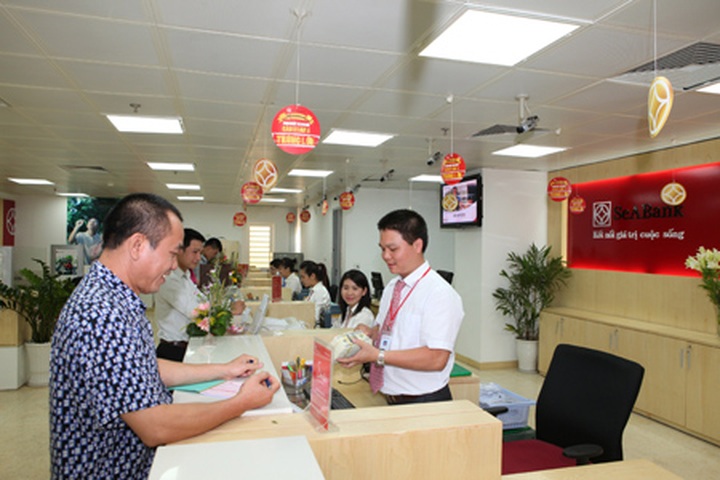
Another example is at SeABank where the local management is very open in placing senior experts of Societe Generale in many top positions from risk management to product division. It is also due to the support from Societe Generale that SeABank joined the 2 world leading card organizations, Visa and Master, faster than expected. The fact SeABank appointed senior French experts in their top management board shows that local banks are very “marketing savvy”. Despite of constraints in language communication or in cultural life, these foreign experts prove to “socialize” so well.
It is not an easy task that the local bank management decides to engage deeply the participation of foreign expert in their management. The two examples above show that local banks are strong enough to lead their team with such constraints or differences in an increasingly competitive environment. What was believed 5 years ago may not be true with the fact that local banks gain more and more advantages from their foreign partners and that they are on the right track. Determination in this people strategy at local banks is therefore valuable and worth the investment.