Mining and vague regulations are having an adverse impact on residents and the environment across Vietnam.
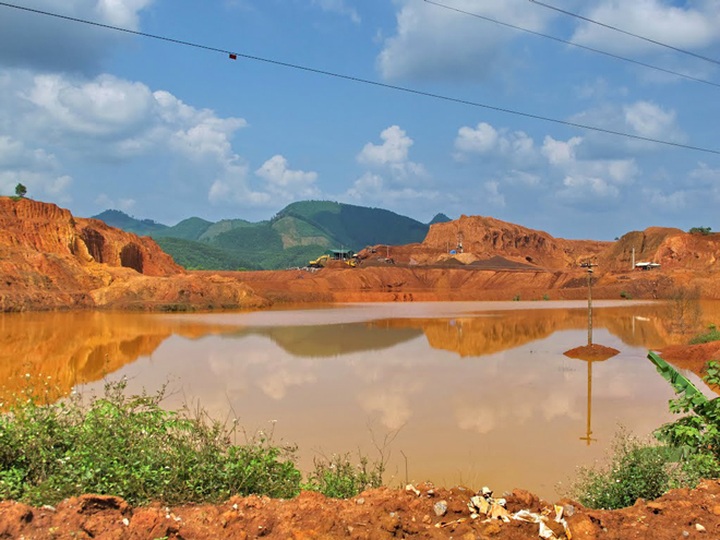
A mine in Trai Cau Town
In Lao Cao Province, an estimated 3 million tonnes or rock and soil is dumped by apatite mining each year; and 11 million tonnes of red mud is dumped from bauxite mining in Tan Rai.
Despite the large number of mines across the country, the industry created only a few hundred thousand jobs, while damaging the lives of many more.
Dang Quoc Tuan, a local in Trai Cau Town, Thai Nguyen Province, said that they had to live with air and sound pollution for the past ten years from the mining activities there.
"There are many times our lands and homes were hit by rocks from mining explosions. The companies said they followed regulations and the explosions were at a safe distance. We think the reports on environmental impacts might not be accurate. More importantly, we're afraid of ground subsidence, especially in rainy season," he said.
Vu Dang Khoa, chairman of Trai Cau Town, said mining activities had lowered levels of underground water, caused air pollution and damaged roads. He said 200 households were living on ground at risk of subsidence.
Tran Thi Thanh Thuy, of the Vietnam Mining Coalition, said environmental taxes and fees are paid into a locality's common budget and can be used for strengthening infrastructure, helping people find jobs after selling land or relocating, but these taxes are not effectively allocated.
A survey by the Vietnam Mining Coalition in 31 communes showed that only a handful were using environmental taxes effectively and money could be being used for wrong purposes.
Vu Dang Khoa said, "The regulations need to be more detailed. All revenues must be announced clearly."