
Stretching more than 1.6 kilometres, En Cave has an estimated volume of up to 6.7 million cubic metres. Its passages extend over 200 metres in width, with ceilings rising to 145 metres. The cave features three entrances, including a rear opening about 120 metres high and 110 metres wide, allowing natural light and ventilation to reach deep inside.

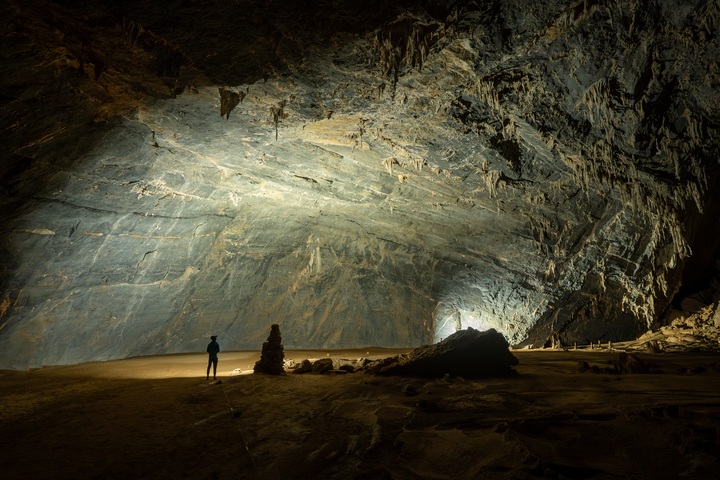
Discovered and announced in 1994, En Cave is located along a geological fault line similar to Son Doong and lies within one of Asia’s oldest limestone mountain ranges. It is estimated to have formed between 2 and 3 million years ago.

The cave entrance opens onto an ancient forested valley, with the Rao Thuong River winding through it. The approach offers visitors a striking view from the first steps of the journey.
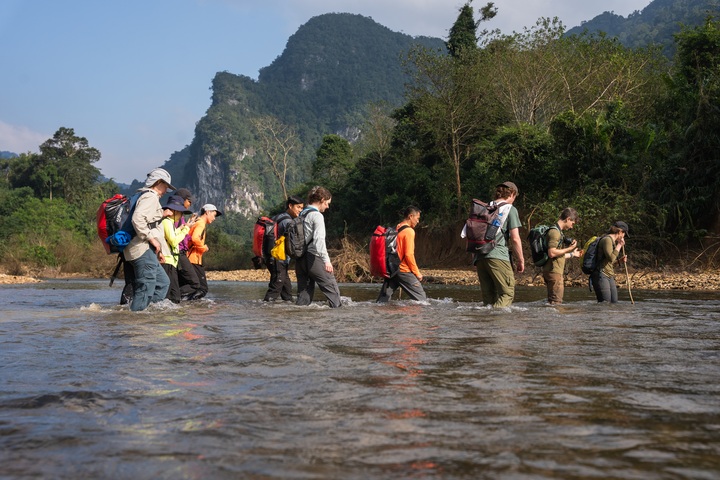
En Cave has been open to adventure tourism since 2012. Access requires trekking through forest, crossing streams and navigating steep terrain, providing a wilderness experience. Tours typically last two days and one night, costing around VND 9 million (approximately USD 350) per person.
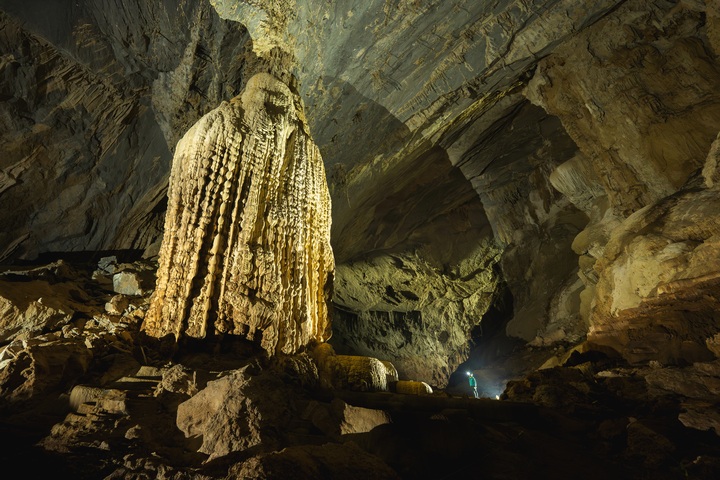
Inside, the cavern’s immense scale is defined by towering ceilings and cascading stalactites that reflect shafts of light, creating a dramatic atmosphere.

Visitors camp overnight on a vast sandy floor beside the Rao Thuong River and a natural emerald pool within the cave. The setting combines grandeur with tranquillity.
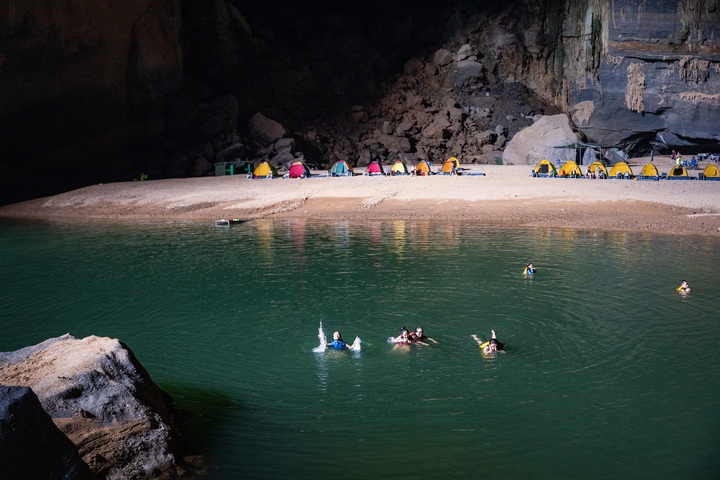
The cave’s emerald waters maintain temperatures of around 20 to 25 degrees Celsius, offering a refreshing contrast to the surrounding landscape.
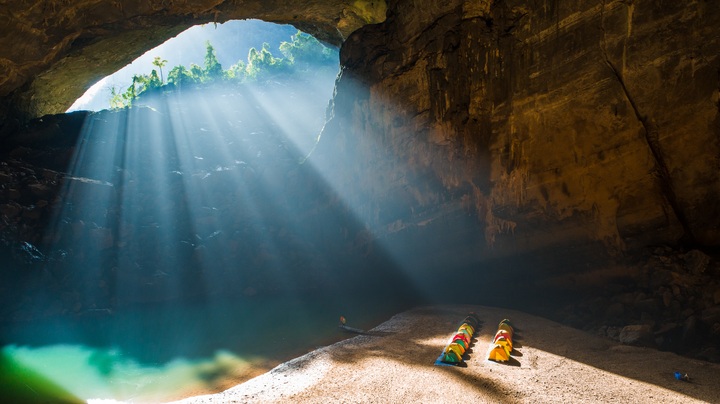
From December to March, sunlight streams through the entrance, illuminating the campsite and stalactites in a spectacle that has become one of En Cave’s most photographed features.

The underground river that runs through En Cave sustains its ecosystem and has shaped the wide sandy beach and pools inside. Mosses, ferns, insects and small fish thrive in the cool, stable environment.
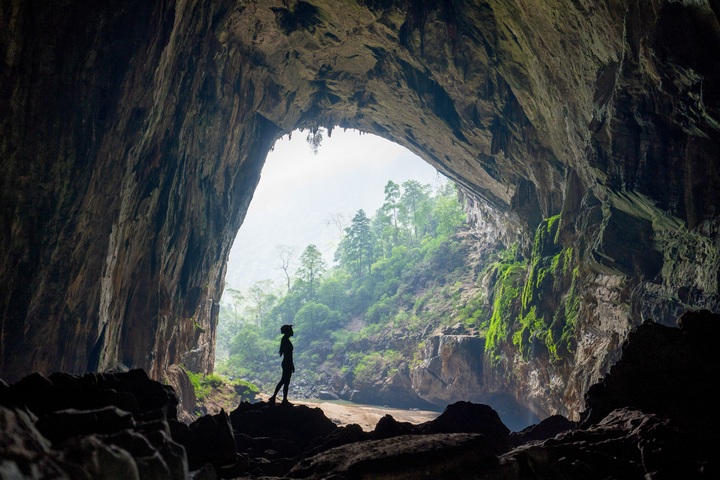
En Cave offers visitors a rare opportunity to experience pristine nature on a monumental scale, underscoring the geological heritage of central Vietnam.
Photos: Oxalis.