The decisive engagement of the Government, the prime minister, deputy prime ministers and the entire political system was the key factor behind the achievement, according to Nguyen Tri Duc, chief of office of the Ministry of Construction.
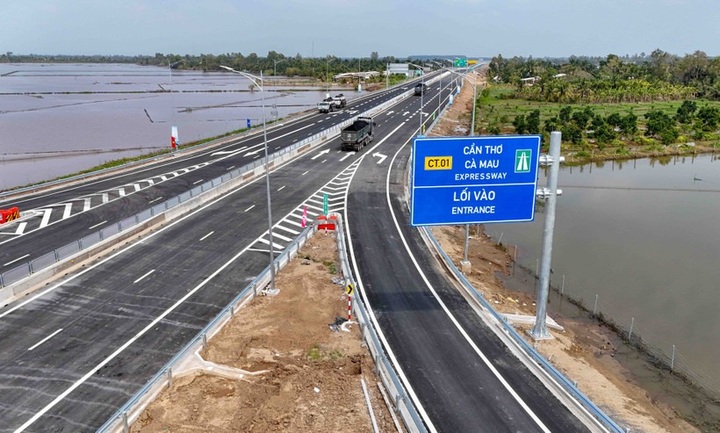
Speaking at the Government’s regular press briefing on January 8, 2026, Duc said that by the end of 2025, some 3,345km of main expressway routes had been put into operation or technically opened to traffic, along with 458km of interchanges and connecting roads. This brought the total length to 3,803km, far exceeding the target of 3,000km. The north-south expressway from Cao Bang to Ca Mau has also been completed and technically opened.
During the period, the Party, the National Assembly and the Government allocated substantial resources to transport infrastructure across all five modes: road, aviation, rail, maritime and inland waterways. A comprehensive set of resolutions and action programmes was issued, setting the goal of 3,000km by the end of 2025.
By 2020, Vietnam had only 1,163km of expressways in operation. Duc said completing at least an additional 1,837km within five years was a major challenge, particularly as institutional bottlenecks remained significant.
To overcome these obstacles, the National Assembly and the Government introduced special mechanisms, including parallel administrative procedures, assigning local authorities as project owners, allowing direct contractor appointment, allocating material mines directly to contractors and increasing mining capacity to ensure progress.
Another decisive factor was consistent direction from central to local levels. The prime minister established seven working groups led by deputy prime ministers to conduct site inspections, resolve difficulties and speed up implementation. The launch of a “500-day emulation campaign” provided both a clear directive from the head of Government and strong motivation for investors and contractors.
Duc said lessons from the programme showed the need to prioritise resources for large-scale, nationally significant infrastructure with strong spillover effects and improved regional connectivity, such as the north-south expressway and major east-west corridors. He added that institutions and policies must be further refined, while decentralisation and accountability of local governments should be strengthened.
He also highlighted the role of national unity and public consensus, citing clear assignment of responsibilities, strict timelines, round-the-clock construction shifts, wider use of science and technology to raise productivity and strong public support in accelerating progress.