
At a meeting on March 17 organised by the Ministry of Industry and Trade, major retailers warned that rising input costs and global logistics disruptions linked to Middle East tensions are intensifying price pressures.
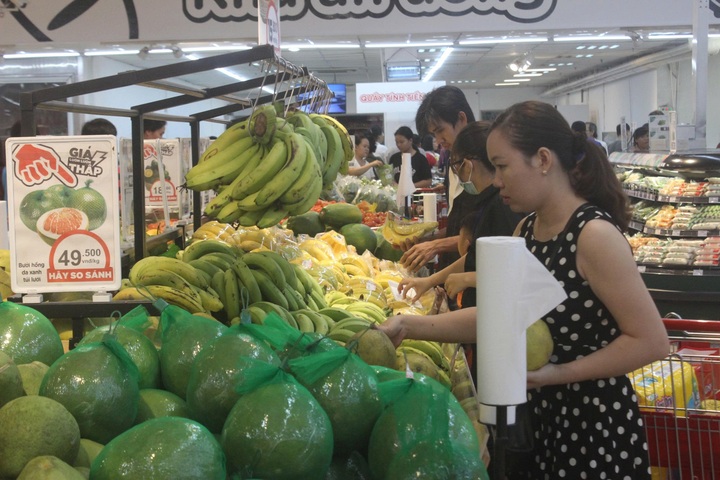
Input costs rising by 15-20 per cent are forcing retail chains to consider price adjustments in the near future (Photo: Huan Tran).
Nguyen Minh Tam, procurement director at WinCommerce, said 70 to 80 per cent of suppliers in its network had asked to raise prices. With more than 4,700 outlets nationwide, any adjustment could directly affect millions of consumers, forcing the company to negotiate carefully to limit increases.
Some suppliers have already paused deliveries while awaiting approval for new pricing. If the trend continues, retail prices could rise by 5 to 20 per cent depending on product categories, the company said.
Consumer data also points to shifting behaviour, with households tightening spending and prioritising essential goods. Demand for discretionary items such as fashion and entertainment is expected to fall sharply in the coming period.
To reduce reliance on imports, WinCommerce has proposed boosting domestic production and encouraging consumption of locally made goods. However, many small and medium-sized enterprises still struggle to meet the quality and regulatory standards required to enter modern retail systems.
Nguyen Thi Thu Hien, communications director at Central Retail Vietnam, said most suppliers to the group had also requested price increases, while its internal operating costs have risen by more than 15 per cent. Although domestic products account for over 90 per cent of its inventory, higher input costs for essentials such as fertiliser, animal feed and fuel continue to drive up expenses.
Hien said current prices could be maintained for only about three more weeks thanks to existing stockpiles, after which adjustments would be unavoidable, indicating that retailers’ ability to stabilise prices is narrowing.
Meanwhile, AEON reported signs of localised shortages in some categories, including imported salmon and frozen meat. Plastic products have also faced input cost increases of up to 30 per cent, putting further upward pressure on prices.
Beyond goods, investment costs for expanding retail networks have surged, with construction materials and transport expenses rising by 15 to 20 per cent, affecting plans to open new stores.
Retailers warned that localised shortages could emerge during upcoming peak holidays such as Reunification Day (April 30) and May Day, when demand is expected to rise while supply remains constrained.
Authorities are closely monitoring supply and demand to maintain market stability. Nguyen Nguyen Phuong, deputy director of the Ho Chi Minh City Department of Industry and Trade, said the main risk lies not only in rising prices but also in potential supply disruptions amid growing global uncertainty.
Fuel supply in Ho Chi Minh City remains stable despite recent administrative expansion, with no widespread shortages reported. However, higher logistics costs are posing a significant challenge for exporters.
In response, the city’s trade department is connecting businesses with e-commerce platforms that offer modern warehousing systems to optimise costs and expand distribution channels. Officials also stressed the need for caution in adjusting retail prices, warning that rapid increases could weaken consumer demand and affect macroeconomic stability.
Authorities said market stabilisation programmes will continue, alongside support for trade promotion and cost-sharing measures, in an effort to prolong price stability nationwide.


