The Tam Anh Research Institute, under Tam Anh General Hospital, and the RNA Institute at the University of New South Wales have signed a research and development partnership covering RNA platforms, medicines and next-generation vaccines.
The agreement was signed on August 9 at the University of New South Wales in Australia, laying the foundation for long-term cooperation in scientific research, workforce training, RNA technology development, preclinical research, clinical trials and preparations for domestic manufacturing of RNA-based biomedical products.
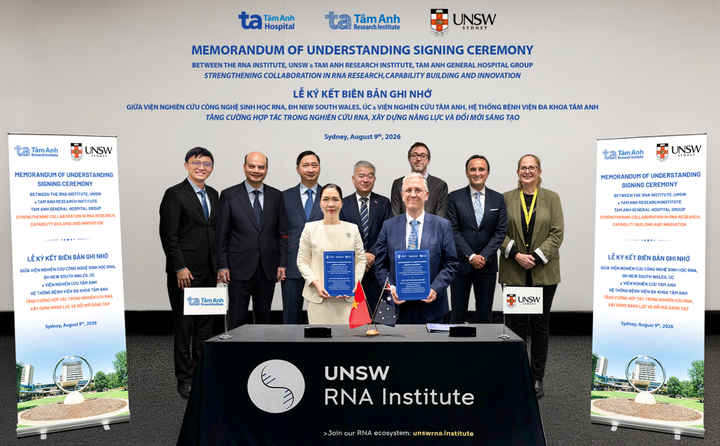
The signing ceremony took place at the University of New South Wales (UNSW) in Sydney, Australia (Photo: Tam Anh Research Institute).
Speaking at the signing ceremony, Nguyen Thanh Tung, Vietnam's consul general in Sydney, welcomed the important scientific cooperation agreement between the Tam Anh Research Institute and the RNA Institute at UNSW.
He said the timing of the agreement was particularly significant, demonstrating how bilateral ties between Vietnam and Australia were being translated into concrete cooperation programmes between institutions in strategically important fields.
Professor Pall Thordarson, director of the UNSW RNA Institute, said Vietnam had an opportunity to become an important driving force behind the RNA technology revolution in the Asia-Pacific region.
The Vietnamese government has demonstrated a clear commitment to developing RNA technology through recent policies, including Decision 1657/QD-TTg issued by the prime minister and Resolution 72-NQ/TW of the Politburo, he said.
Vietnam's experience in conducting mRNA vaccine clinical trials, together with the World Health Organization's recognition of the country as having reached Maturity Level 3 for its vaccine regulatory system, were also factors making Vietnam an attractive partner for Australian researchers, Thordarson said.
"The UNSW RNA Institute sees the Tam Anh Research Institute as a leading candidate for a partnership that could have a lasting and substantive impact on RNA research and technology development in the Asia-Pacific region," Pall said.
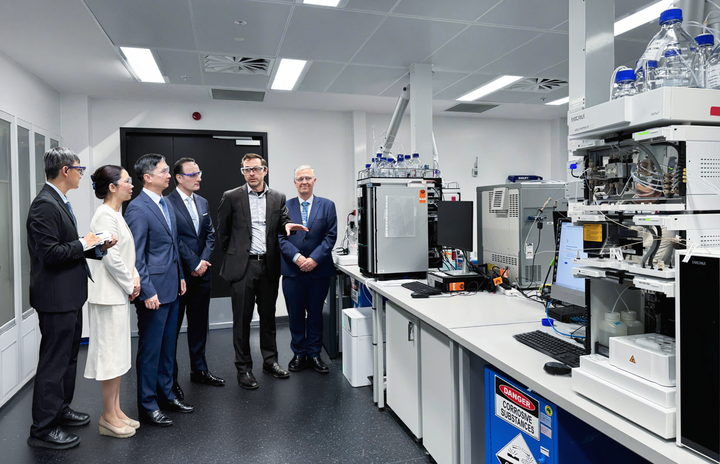
Experts from the RNA Institute introduce the laboratory and preclinical centre at the University of New South Wales, where important biomedical research is under way to develop next-generation medicines and vaccines (Photo: Tam Anh Research Institute).
Mapping lung and colorectal cancer mutations in Vietnam
The value of the partnership lies not only in technology transfer but also in jointly generating data and developing solutions suited to disease patterns among Vietnamese people and populations across Southeast Asia.
"Vietnam should not stop at being a manufacturing destination. It has the capacity to become a design and evaluation hub for diseases and populations that have not received sufficient attention from global research networks," Pall said.
As an initial step, the UNSW RNA Institute has proposed two priority programmes: developing an mRNA flu vaccine for Vietnam and developing personalised cancer vaccine candidates for patients with lung or colorectal cancer.
The programmes could deliver direct benefits to Vietnam while expanding the two institutions' RNA research capabilities and data resources across the Asia-Pacific region.
Dr Phuong Le Tri, executive director of the Tam Anh Research Institute, said this was the first time Vietnam had accessed a comprehensive RNA development model linking basic research, technology development, preclinical assessment, clinical trials and preparations for domestic manufacturing.
"Based on the existing capabilities of both sides and Tam Anh's extensive experience, the UNSW RNA Institute believes this partnership will provide a launchpad for Tam Anh to achieve successes that even we cannot fully imagine today," Pall said.
In the past, Vietnam largely accessed vaccines and biological medicines after their underlying technologies had already been developed. The partnership with the UNSW RNA Institute could open a new path by allowing Vietnamese scientists to participate in core technology research from the earliest stages.
This could help develop safer vaccines and medicines, gradually build domestic expertise in RNA technology, strengthen national health security and contribute to the global biomedical innovation ecosystem.
The RNA Institute at the University of New South Wales is one of Australia's leading biomedical research centres, specialising in RNA science and technology. It is part of UNSW Sydney, a member of the Group of Eight (Go8), Australia's leading research-intensive universities.
According to the QS World University Rankings, UNSW is ranked 19th globally and first in Australia.
The RNA Institute is pursuing research and development of mRNA vaccines against influenza and personalised cancer vaccines for lung and colorectal cancer. It also aims to gradually establish capabilities across the RNA technology chain, which underpins many vaccines, biological medicines and next-generation therapies.