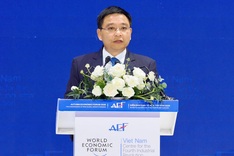
The opportunities and challenges have come into focus at the Autumn Economic Forum 2026 (AEF 2026), held in Ho Chi Minh City from October 26 to 29, where business leaders, investors and international organisations are discussing technology, innovation and new sources of growth.
Ge Jun, chief executive of TOJOY Enterprise Services, whose platform connects over seven million entrepreneurs worldwide, said the company plans projects in Vietnam involving the low-altitude economy, AI-powered service equipment and construction robots.
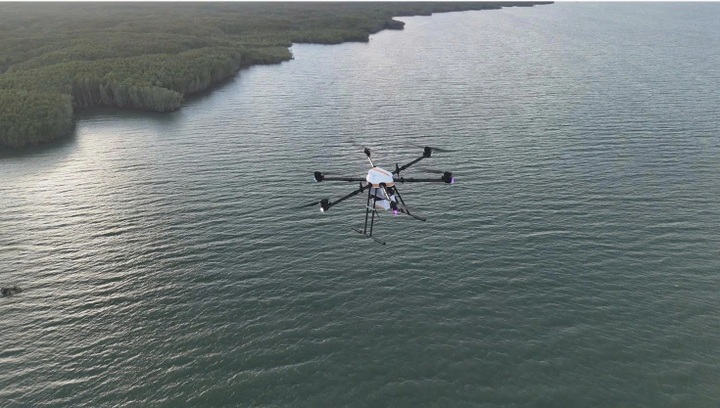
TOJOY plans to work with partners on three to five low-altitude economy projects serving tourism, urban transport and logistics.
For smart service equipment, the company expects to introduce an initial 500 devices to Vietnam, with investment of USD 1.5-3 million, before expanding to more than 2,000 devices, representing investment of USD 6-12 million.
Its construction robotics plans involve deploying 30 robots initially, with the number expected to rise to 300.
The projects are intended to involve localisation, partnerships with Vietnamese businesses, knowledge transfer and the development of local operational capabilities.
They also highlight the broader challenge facing Ho Chi Minh City of ensuring that new technology investment goes beyond importing equipment to build domestic production capacity, operational expertise and a skilled workforce.
Expanding opportunities for technology investment
At the October 26 CEO 500 Forum, part of AEF 2026, Ho Chi Minh City Vice Chairman Nguyen Cong Vinh said the city prioritised high-quality FDI in technology, energy infrastructure and sustainable finance. The event drew over 500 business leaders and representatives of international organisations, financial institutions and government agencies.
The city aims to attract a record USD 19 billion in registered foreign investment this year.
Vinh outlined priorities spanning infrastructure, new development areas, the International Financial Centre, clean energy, the digital economy and innovation, stressing the need for investment to bring technology, expertise, modern management, high-quality jobs and new production capabilities.
To achieve these goals, the city is seeking business participation in transport infrastructure, logistics, the energy transition, smart urban development, smart manufacturing, the digital economy and artificial intelligence (AI).
Major domestic corporations are expected to build business ecosystems through technology transfer, workforce development, innovation and supply chain integration, helping smaller firms join international production networks.
Vinh affirmed the city's commitment to turning forum opportunities into results through clear responsibilities and timelines. The Ho Chi Minh City Centre for the Fourth Industrial Revolution (HCMC C4IR) would coordinate follow-up on initiatives, proposals and projects to put capital, technology and knowledge to work.
These priorities are being translated into investment commitments and technology proposals presented at the event.
According to To Viet Thang, standing deputy chief executive of Vietjet Air, Long Thanh International Airport was creating investment opportunities for Ho Chi Minh City and surrounding areas in aviation infrastructure, logistics and airport operations technology.
AI, big data and digitalisation are expected to play an increasingly important role in the sector, driving demand for highly skilled workers.
Vietjet Air and Sovico Group are pursuing cooperation with partners including Airbus and Rolls-Royce to develop the aviation industry and related services.

Investment procedure reforms seen as crucial
Ho Chi Minh City attracted about USD 17.8 billion in registered FDI in the first nine months of 2026, 4.2 times the year-earlier level and exceeding its initial annual target of USD 11 billion, with several more billion-dollar projects recently committed.
TikTok, for example, has two projects in Ho Chi Minh City with combined registered investment of more than USD 1.1 billion, comprising TikTok Shop Vietnam at USD 125 million and Swift Logistics at USD 980 million.

According to Nguyen Lam Thanh, general director of TikTok Vietnam, FDI now brought not only capital but also technology, management practices, partner networks and access to markets.
In e-commerce, logistics is integral to the shopping experience, affecting costs, delivery times and market expansion, particularly for small businesses, household enterprises and local sellers.
Thanh said effective implementation could expand service capacity, create jobs and give businesses access to new technologies and networks, stressing that FDI should strengthen local supply chains and be judged by tangible results rather than registered capital alone.
Technology and data could help connect different parts of logistics networks while expanding opportunities for small businesses and local sellers.
From a foreign investor's perspective, a favourable investment environment and the ability to implement projects efficiently are essential to ensuring that investment commitments translate into economic activity.
Fazurin Jamaludin, the International Monetary Fund's (IMF) resident representative for Vietnam and Laos, said Vietnam had an opportunity to benefit from the wave of investment in AI.
Its ability to capitalise on that opportunity would depend on its position in global supply chains, requiring continued policy improvements, better data quality and efforts to address structural constraints.
Peter James Opdahl, chairman of ITO Group Holdings, said reforming investment procedures was crucial to attracting high-tech capital to Ho Chi Minh City.
ITO, a provider of industrial automation solutions, is building a 12,000-square-metre factory at Linh Trung Export Processing Zone. The project was the first to receive approval under a special fast-track investment procedure known as the "green lane".
Opdahl urged Vietnam to expand supply chains, strengthen its domestic market and help smaller firms build international links, stressing that growth required cooperation and continued support through mechanisms such as the green-lane procedure.
Foreign investment must build domestic capabilities
According to Associate Professor Nguyen Huu Huan, vice chairman of the executive body of the Vietnam International Financial Centre in Ho Chi Minh City, the challenge was to turn investment into domestic production capacity, technological expertise and added value, rather than simply attract more capital.
He stressed that technology projects should go beyond capital, equipment and factories to involve Vietnamese engineers, integrate local suppliers and enable technology transfer, adoption and improvement.
The key measure of success is not merely the amount invested, but what the economy retains after each project, including technological expertise, skilled engineers, intellectual property, domestic suppliers and products capable of competing in international markets.
Such outcomes are essential if investment in AI, semiconductors, robotics, clean energy and advanced materials is to help Vietnam develop its own technological capabilities rather than simply serve as a destination for foreign capital.
The Autumn Economic Forum 2026, held in Ho Chi Minh City from October 26 to 29, is expected to attract over 1,500 delegates, including government leaders, business executives, investors and representatives of international organisations.
Under the themes "Convergence of New Global Growth Engines" and “Collaboration in a New Era", the forum focuses on investment, technology, innovation, infrastructure and emerging drivers of global growth.
Investment commitments and projects announced at the forum highlight Ho Chi Minh City's challenge of turning international resources into innovation capacity and new growth drivers to support its double-digit growth ambition.
This Dantri/DTiNews series explores the city's innovation efforts, investment and technology projects, and the opportunities and challenges in boosting global competitiveness, achieving sustainable growth and building a modern, smart city.