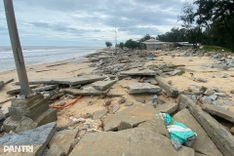
Vietnamese river and lake network has been facing serious pollution problems due to the large amount of waste discharged by industrial parks and even handicraft villages.

Untreated waste threatens rivers and lakes in Vietnam
According the latest survey, over 4% of handicraft villages in rural areas in Vietnam use equipment that openly discharge waste products.
Inspections by the environmental police showed that nearly 70% of industrial parks and export processing zones nationwide do not have wastewater treatment systems; meanwhile the rest has inadequate systems.
At all industrial parks and export processing zones, criteria for biochemical oxygen demand (BOD) and chemical oxygen demand (COD), coliform, suspended solids and heavy metals surpassing regulated levels, threatening the river system.
The Dong Nai River receives 1.74 million cubic metres of industrial sewage per day, which contains 671 tonnes of sediment, 104 tonnes of nitrogent, 15 tonnes of phosphor and heavy metals.
The river and lake system of the northern region is in the same situation. The Cau River is seriously affected by wastewater discharged from 2,000 enterprises of different sectors in localities from Hanoi, Thai Nguyen, Vinh Phuc, Bac Ninh, Bac Giang to Hai Duong.
The basin area of Nhue and Day rivers now face waste from industrial and agricultural production of Hoa Binh, Hanoi, Ha Nam, Nam Dinh and Ninh Binh.
Environmentalists warn that without timely measures taken, the problem could affect tens of millions of people.
Vietnam's legal structure on pollution control remains out of date, leaving loopholes that enterprises use to pollute the environment.
To date, roughly 19% of communes and 9% of villages in rural areas nationwide have built sewage treatment systems.