 |
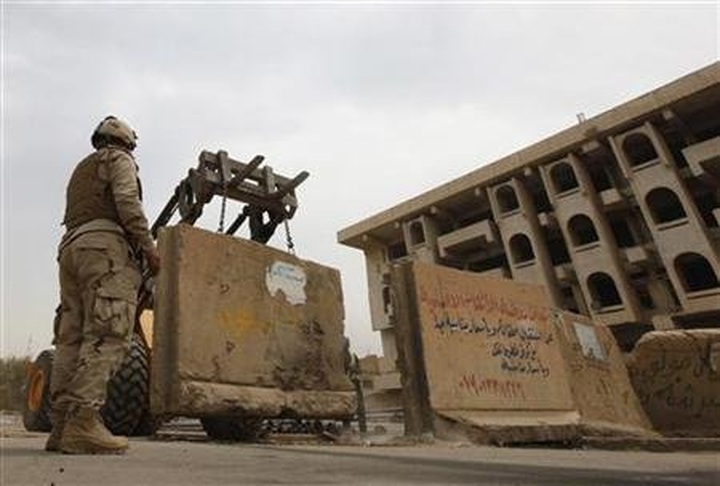
| An Iraqi soldier stands near anti-blast walls being removed from a street in Baghdad's Mansour district April 30, 2012. |
Sectarian tensions have been high in Iraq since the withdrawal of U.S. forces in December, with the country's main Shi'ite, Sunni and Kurdish blocs locked in a political crisis that threatens to wreck a power-sharing deal.
Sunday's attack occurred in Quraish Square in Baghdad's northwestern Kadhimiya district, where pilgrims were gathering ahead of a religious festival to mark the anniversary of the death of mediaeval Shi'ite imam Moussa al-Kadhim.
Police sources said the death toll could rise.
During the same religious pilgrimage in 2005, about 1,000 people were killed when rumors of a bombing on the Bridge of the Imams - which leads to the golden-domed shrine - triggered a stampede that clogged the river below with bodies.
An Interior Ministry source said security forces had been put on high alert and that a tight security belt was in place around Kadhimiya in a bid to prevent further attacks on pilgrims walking towards the Imam Kadhim shrine.
A vehicle ban, excluding emergency vehicles like ambulances, would be imposed in Kadhimiya from Monday and anyone entering the area would be physically searched, said the source, declining to be identified.
At least 26 people were killed and more than 190 wounded last Monday when a suicide bomber detonated an explosives-packed car outside a Shi'ite Muslim office in central Baghdad.
A group that monitors online communication among insurgents said on Sunday Al Qaeda's affiliate in Iraq had claimed responsibility for the attack on the government-run Shi'ite Endowment, which manages Shi'ite religious and cultural sites.
The U.S.-based SITE Intelligence Group said the Islamic State of Iraq (ISI) group also said in the statement posted on Islamist websites that it had carried out 39 other attacks targeting Iraqi security forces and officials in Baghdad between March 24 and May 21.