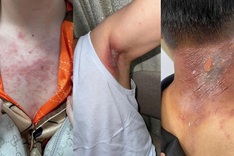
A 29-year-old woman in Yen Hoa Ward woke to a burning red streak on her neck, which later developed blisters and spread to her arm and collarbone.
Dermatologist Nguyen Tien Thanh diagnosed irritant contact dermatitis caused by pederin, a toxin found in certain rove beetles of the Paederus genus, commonly known in Vietnam as kien ba khoang.

Thanh said the insects are attracted to artificial light and frequently enter homes during humid weather, particularly near gardens, fields and construction sites. Even high-rise apartments are not immune.
The beetles do not need to bite or sting. Their toxin can irritate the skin when they are crushed or rubbed against it.
Symptoms typically appear within 12-48 hours, starting with redness and burning before developing into blisters or burn-like streaks.
Unlike shingles, which usually affects a defined area on one side of the body, rove beetle dermatitis often produces irregular streaks or patches where the toxin has touched the skin.
Doctors warned against self-medicating with shingles treatments, applying toothpaste or herbal remedies, or rubbing affected skin with concentrated alcohol, as these can worsen irritation and increase infection risks.
Most patients recover within one to three weeks with appropriate care, although skin discolouration may persist for months.
People who find a beetle on their skin should gently blow or brush it away rather than crush it. Any exposed skin should be washed promptly with mild soap and water.
Medical attention is advised for extensive blistering, severe pain, swelling, pus or fever. If the toxin enters the eyes, immediate rinsing and specialist treatment are recommended.
Residents are also advised to install insect screens, limit open windows near lights at night and check bedding and clothing before use, particularly during humid weather.