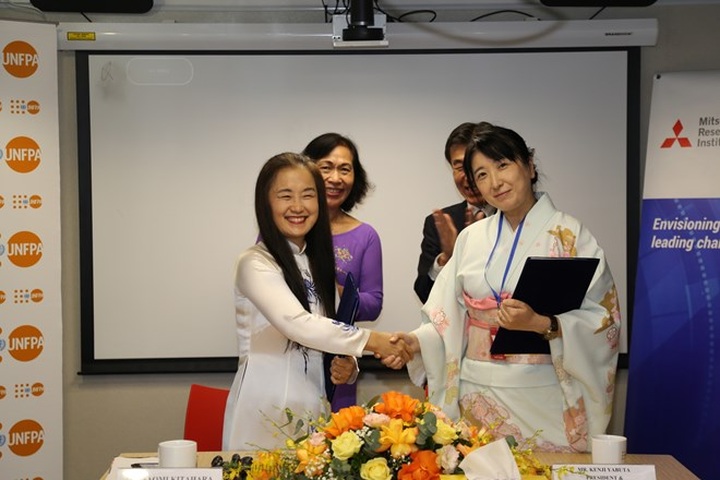
Naomi Kitahara, UNFPA Representative in Vietnam (left) and her Japanese partner at the signing ceremony. — Photo courtesy of the UNFPA
Both the UNFPA and MRI Representatives committed to working closely together in joining hands with the Government of Vietnam and the international community to effectively address population aging and other emerging population issues in Vietnam.
Vietnam has officially entered the "aging phase" since 2011, and is projected to become an “aged” society by 2036. Currently, the number of older persons (60 years or over) is 12.6 million, which is 12.8 percent of the total population, and is expected to increase to 22 million by 2038, accounting for 20 per cent of the total population. Vietnam is one of the most rapidly aging countries in the world.
Addressing the signing ceremony on August 25, MRI President, Kenji Yabuta, stressed that over the past 30 years, MRI has undertaken the trial and error of trying to create a society where everyone can live comfortably through measures to address the ageing population in Japan, such as the introduction of a long-term care insurance system and support for private long-term care providers."We are very pleased to sign the MOU with UNFPA in Vietnam and feel that UNFPA is truly acting as a bridge between Japan and Vietnam,” he said.
Speaking at the event, UNFPA Representative in Vietnam, Naomi Kitahara, said that they saw a lot of opportunities for innovation and thought leadership in this alliance with the MRI, as they would be working closely together to promote the rights and dignity of older people through improving health and social care services and creating the enabling environment for the elderly.
"Following the signing event today, the plan is for both sides – UNFPA and MRI to explore the best models for Vietnam in providing for older persons, and prepare young generations for the future in which all ages are celebrated and no one is left behind," she said.
This new partnership will focus on the issues of ageing and other population matters, such as sexual and reproductive health and rights, health care for young people, and gender equality.