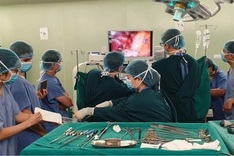
According to GLOBOCAN figures cited in the report, lung cancer ranks second among cancers in Vietnam by the number of new cases and remains one of the country's leading causes of cancer-related deaths.
The disease places a heavy burden on patients, families and the healthcare system, particularly as late diagnosis often requires prolonged and costly treatment.

Treatment may involve chemotherapy, radiotherapy, targeted drugs or immunotherapy, some of which are not covered by health insurance.
Costs can run into hundreds of millions of Vietnamese dong annually, putting considerable financial pressure on families.
In 2023, Vietnam's health insurance fund spent VND 6.186 trillion (about USD 237 million) on six common cancers, including breast, lung, liver, colorectal, stomach and prostate cancers.
One estimate puts the average annual treatment cost for a cancer patient at more than VND 176 million (about USD 6,740), with complicated cases potentially costing substantially more.
Families may also lose income when relatives leave work to care for patients, adding to the financial strain.
Most lung cancer cases detected late
Around 75 per cent of lung cancer patients in Vietnam are diagnosed at an advanced stage, when tumours may have spread to organs such as the brain, liver, bones or adrenal glands.
Doctors say late diagnosis significantly reduces treatment options and the chances of controlling the disease.
Smoking remains the leading risk factor for lung cancer. Smokers face an estimated 15 to 30 times the risk of developing the disease compared with non-smokers, while exposure to second-hand smoke increases the risk by around 20-30 per cent.
Although the disease is more common among older people and long-term smokers, it can also affect younger adults and those who have never smoked.
Early screening improves survival prospects
"Lung cancer can be detected early. The earlier it is found, the better the chances of effective treatment and survival," said Associate Professor Pham Cam Phuong, director of the Nuclear Medicine and Oncology Centre at Bach Mai Hospital.
Patients diagnosed at an early stage may be eligible for surgery, while more advanced cases can require combinations of surgery, chemotherapy, radiotherapy, targeted therapy and immunotherapy.
According to the US Surveillance, Epidemiology, and End Results (SEER) programme, the five-year relative survival rate for localised lung cancer is approximately 65 per cent.
Outcomes are generally poorer once the disease has spread, although survival varies depending on tumour characteristics and response to treatment.
Phuong said early detection can be difficult because symptoms are often vague, making screening particularly important for people at high risk.
She advised adults aged 50-80 with a smoking history of at least 20 pack-years to discuss annual low-dose computed tomography (LDCT) screening with their doctors, in line with appropriate guidelines.
A pack-year is equivalent to smoking one pack of cigarettes a day for one year.
LDCT can detect small lung nodules and uses substantially less radiation than a conventional diagnostic chest CT scan.
Other risk factors, including family history, exposure to asbestos or radon, and chronic lung disease, should be assessed individually by doctors when considering screening.
Health experts also recommend quitting smoking, avoiding second-hand smoke and harmful chemicals, limiting exposure to fine particulate pollution, and maintaining a balanced diet, regular physical activity and a healthy weight.
World Lung Cancer Day, observed annually on August 1, aims to raise awareness of the disease, its risk factors and the importance of early detection.