In the Central Highlands, Vietnam’s main coffee-growing region, raw coffee bean prices are hovering at VND 98,000–101,000 per kg. In Lam Dong, beans are trading at around VND 100,500 per kg, while prices in Dak Nong are close to VND 101,000. Dak Lak, the country’s largest producing province, has also recorded prices of about VND 100,900 per kg.
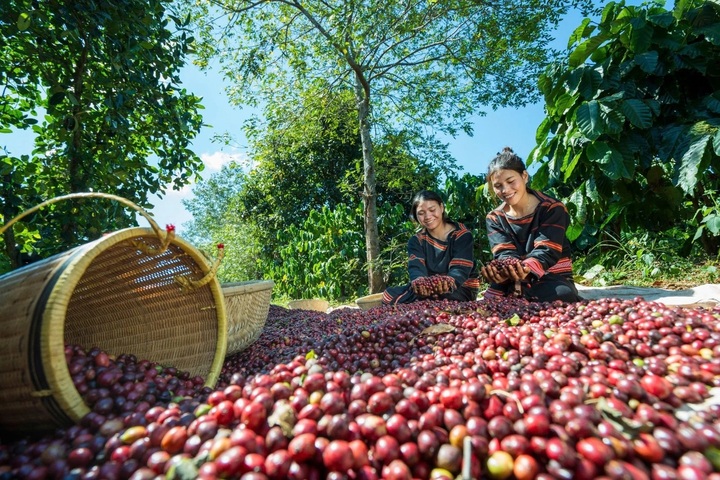
The Vietnam Coffee and Cocoa Association (Vicofa) said prices have remained high for an extended period due to several factors. Climate change has reduced output or pushed production below expectations in many major producing countries. For robusta, in which Vietnam dominates global supply, availability is no longer abundant, while demand remains steady and is trending upwards.
Global coffee consumption is also expanding, particularly in Asian markets and emerging economies. The growing use of robusta in blends to partially replace arabica and cut costs has further boosted demand for Vietnamese coffee.
Beyond supply and demand, cautious selling behaviour has helped underpin prices. Farmers are no longer rushing to sell immediately after harvest, while exporters are carefully timing price fixing.
According to Vicofa, Vietnam exported about 1.59 million tonnes of coffee in 2025, generating nearly USD 8.9 billion in revenue. The average export price reached almost USD 5,600 per tonne, the highest level on record and nearly three times higher than in the 2019-2022 period.
In the first half of January alone, Vietnam exported more than 89,000 tonnes of coffee worth about USD 433 million. Although the peak export season has yet to begin, the value generated has been striking, making coffee one of the country’s top agricultural earners early in the year, second only to wood and wood products.
“With current high prices, farmers have better conditions to reinvest in plantations, improve farming techniques and enhance quality,” a Vicofa representative said. “However, input costs such as fertilisers, labour and irrigation have also risen sharply, meaning profits are not as comfortable as many might assume.”