Hanoi's municipal Department of Health has initiated a project to reduce overcrowding in hospitals over the next eight years, with a total investment of more than VND25.7 trillion (USD1.2 billion).
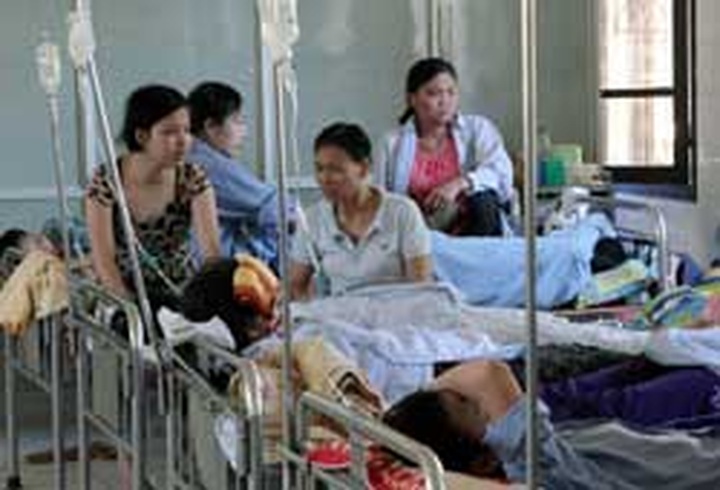 |
| Hanoi - based Bach Mai Hospital is always crowded with patients. The Hanoi Department of Health has proposed building 25 new hospitals with over 8,300 beds. — VNA/VNS Photo Duong Ngoc |
The department has proposed building 25 new hospitals with over 8,300 beds, which would supplement the current 40 hospitals with around 8,000 beds.
Fourteen hospitals would be modernised and six others would be enlarged. It is expected that by 2020 more than 5,200 new beds would be available for use.
The project would also upgrade medical equipment and hospitals in the inner city.
The project aims to reach a ratio of eight doctors and 2.5 pharmacists per 10,000 residents by 2020, up from the current ratio of seven doctors and 1.5 pharmacists, according to department statistics.
Doctors would rotate between hospitals at the grassroots and central levels.
Overcrowding is common in Saint Paul, Dong Da, Duc Giang, Soc Son, Obstetrics and Gynaecology, and Heart hospitals.
The department has reported that many hospitals are operating at over 100 per cent capacity. In some wards the rate was even higher: more than 200 percent at Saint Paul's Paediatrics Ward, 223 percent at the Duc Giang's Paediatrics Ward and 261 per cent at the Hanoi Obstetrics and Gynaecology's Labour Ward A2.
The department's deputy director Nguyen Thi Thanh Huong attributed the overcrowding in central hospitals to better doctors and equipment there, drawing patients from far away.
Therefore she said the most important step toward easing hospital overcrowding was improving the quality of doctors and equipment in medical stations at the grassroots level.
However, many doctors and patients do not believe in the project's feasibility.
A doctor at the Hanoi Obstetrics and Gynaecology Hospital, who asked not to be named, said that the project was unrealistic.
"At present many central hospitals are financially independent, so they must do everything they can to increase their income, including filling sick beds to capacity. How can patients escape from sharing sick beds?" she asked.
To have a real impact, she said, the health sector should focus on re-structuring its financial mechanisms, a project that cannot be finished after eight years.
Nguyen Van Huong, a patient with chronic rheumatism living in Dong Da District, said he used to go to his ward's healthcare centre to get his check-up, but he was sceptical about the quality of the equipment there.
"Moreover, my pain did not disappear after taking the medicine prescribed by the centre's doctors," he said, adding that he thought he ought to go to the city hospitals instead.
"It's such a waste of money to build more hospitals. Why don't they use the money to upgrade local-level medical centres to attract more patients," Huong suggested.