 |
| After contracting the disease, most patients choose to stay at home because they do not believe that their illness can be treated well in hospitals, the report says. |
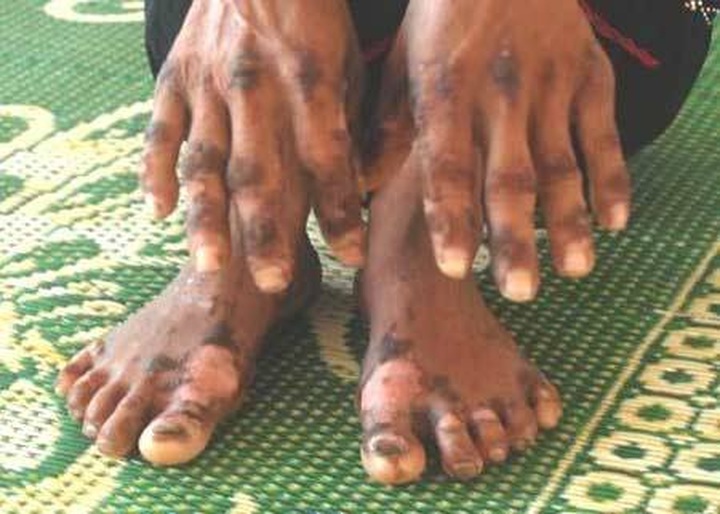
Several patients have recovered well from their illness at hospitals, but the condition has recurred after their discharge, often more seriously than the first time, according to an unnamed official from the Quang Ngai People's Committee.
There has been a sudden increase in the number of patients in recent days because health officials have identified an additional 19 people infected with the disease during an inspection of the locality, according to the latest report from the province's Health Department.
Dang Thi Phuong, director of the Ba To District's healthcare centre, said most of the infected people chose not to go to the hospital, making it difficult to know the exact number of patients suffering the disease.
The disease has relapsed in nearly 50 per cent of the total number of infected cases. Among the 21 fatalities, at least 10 people had the disease recur with serious complications including multiple organ failure.
After contracting the disease, most patients choose to stay at home because they do not believe that their illness can be treated well in hospitals, the report says.
The Quy Hoa National Leprosy and Dermatology Hospital has been the favourite choice of residents so far, but several patients have had to be transferred to other hospitals after developing serious symptoms like organ failure.
Recently, the Binh Dinh General Hospital received nine patients with serious complications of the disease. Four have died and the other four have temporarily recovered. One child is in intensive care.
The Nguoi Lao Dong (The Labourer) newspaper quoted Nguyen Hoang Minh, deputy director of the Binh Dinh General Hospital, as saying that the death rate was high when the disease affected internal organs of the patients.
Minh said that the nine patients the hospital received were those who had suffered serious complications. They'd only had skin treatment at the Quy Hoa National Leprosy and Dermatology Hospital during the early time of illness.
Minh admitted that the hospital could only help the patients overcome their critical health symptoms, but could not treat the disease completely because the cause of the illness was not known.
Meanwhile, a Tuoi Tre newspaper report yesterday cited Le Han Phong, head of the Ba To District People's Committee as urging the Ministry of Health to take help immediately from the World Health Organisation in identifying the cause of the disease which has occurred in the locality for roughly three years now.