 |
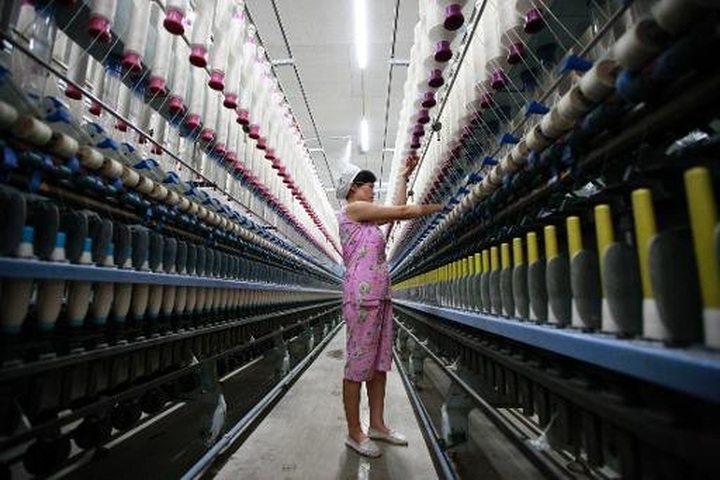
| A laborer is seen working in a textile factory in Huaibei, in north China's Anhui province on July 24, 2013 |
The index tracks manufacturing activity in China's factories and workshops and is a closely watched gauge of the health of the economy. A reading above 50 indicates growth, while anything below signals contraction.
The strong performance in October came on the back of "broad-based modest improvements" in the Chinese economy, said Qu Hongbin, an HSBC economist in Hong Kong, in a statement accompanying the data.
"This momentum is likely to continue in the coming months, creating favourable conditions for speeding up structural reforms," he said.
The October PMI reading may help alleviate market concerns over the sustainability of China's recovery.
Growth in July-September hit 7.8 percent year-on-year, snapping two quarters of slowing expansion, according to official data released last week.
The jump was mainly a result of government stimulus since late June that featured increased rail and urban fixed-asset investment, tax cuts and looser monetary policy, analysts said.
But the country's rising inflation and excess market liquidity are limiting room for further monetary loosening, while skyrocketing local government debt and slowing fiscal revenue growth are restricting the scope for more tax incentives, they said.
HSBC is slated to announce its final PMI figure for October on November 1.