
Despite low credit growth, many banks have attempted to attract deposits.
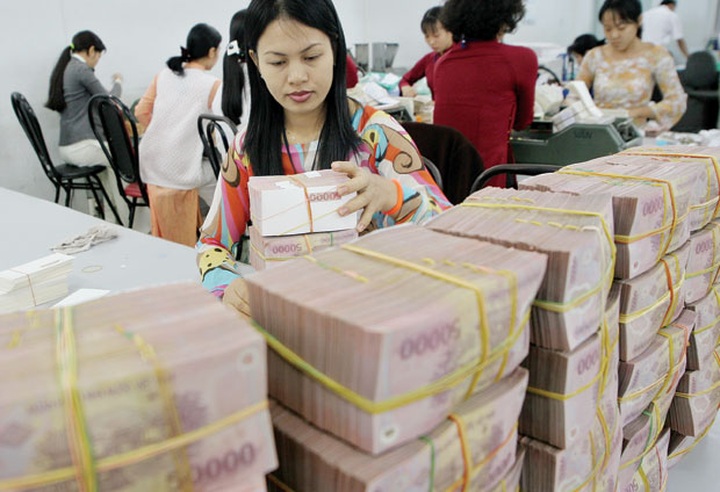
Unsettled bad debts cause high interest rates
The situation has drawn public concern over the safety of the banking system.
Tran Van Tan, Head of Credit Office under the State Bank of Vietnam (SBV)’s Credit Department, said total lending of the banking system in the first six months of this year was lower than the figure in late 2011.
Thanks to proactive moves taken by the SBV and financial institutions, credit growth has improved since the beginning of the third quarter of this year. By the end of September, credit growth nearly reached 2.5% while total deposits at banks increased by 13% compared to early 2012, he said.
According to Tan, low credit growth is attributed to the low capacity of firms to borrow and bank caution in lending for fear of potential bad debts.
Speaking of the deposit and lending paradox, Dr. Can Van Luc, a banking expert, said banks were stepping up attracting deposits in order to ensure liquidity.
For years, credit growth has always been higher than deposits, reaching over 30% compared to from 25%-27%. Even last year, credit growth was quite low, at around 11%, deposit rate was only between 10.3% and 10.5%.
“In order to ease liquidity issues, some commercial banks have to attract more deposits. As of August 31, the SBV’s statistics showed that lending on deposit rate was 91%. However, the rate still implies potential liquidity risks, which forces banks to continue to lure deposits to improve the situation,” Luc emphasised.
While trying to restructure their deposits, banks are making efforts to attract medium and long-term by applying attractive interest rates. They also want to increase their cash reserves and prepare for huge disbursements in the last months of the year.
“In addition, some small and incompetent banks that have yet to be wholly restructured still face difficulties in liquidity. So, they have to attract more deposits at high interest rates,” Luc said.
Recent instability in the global gold market has also caused a domestic interest rate race, said an anonymous high-ranking financial expert of an auditing company. Bad debts in the banking system still remain a big problem, he noted.
The SBV’s statistics showed that by the end of March 2012, bad debts totalled around VND202 trillion (USD9.67 billion), accounting for 8.6% of the total lending. However, many foreign and domestic experts said that the real figure could be much higher and would be on the rise due to the economic difficulties some firms were facing.
Increasing bad debts threaten liquidity in the banking system. When a large amount of money is lent out, a modest volume of deposits is attracted meaning commercial banks are compelled to increase their risk provision funds.
“In fact, banks operate based on deposits. The more demand for deposits there are, the higher the interest rates,” he added.
Dr. Nguyen Duc Thanh, Director of the Vietnam Centre for Economics and Policy Research (VEPR) said interest rates would remain high until a solution to the bad debts was worked out.