The Vietnam Association of Architects (VAA) has complained to the Airports Corporation of Vietnam (ACV) about the small prizes offered in a design contest for Long Thanh International Airport in the southern province of Dong Nai.
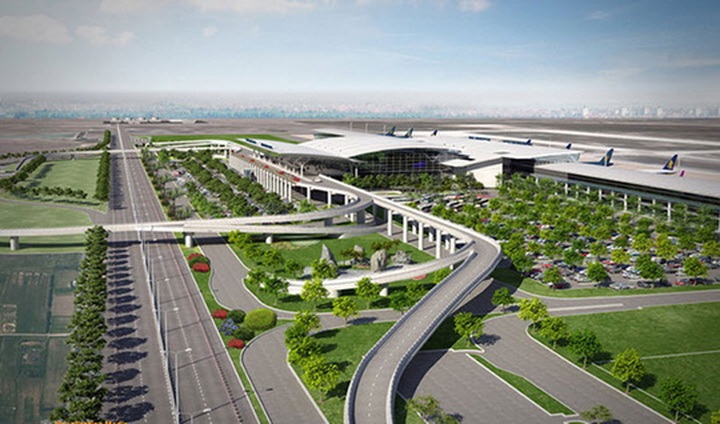
A layout for the Long Thanh International Airport
The contest launched recently by ACV aims to find the best design for the airport's 400,000 square-metre passenger terminal which is expected to handle 25 million passengers a year in the first phase. The design needs to meet the requirements of the International Civil Aviation Organisation and the International Air Transport Organisation for services at leading airports around the world.
ACV said that the passenger terminal should be connected consistently with infrastructure facilities at the airport, be in harmony with the surrounding landscape, and in line with the approved master-zoning plan for the multi-billion airport, which is envisioned becoming an aviation hub for Southeast Asia.
The VAA is also complaining that contestants should have done at least two such passenger terminals with total floor space of at least 100,000 square metres for international airports which have been put into operation over the last 15 years. The association said that this requirement is not feasible as there were few international airports built in the world over the past 15 years.
"This requirement will limit the participation of capable domestic and international architecture consultant organisations," VAA said. "It will also limit the choices for the best designs."
Moreover, the VAA also said that the awards of USD15,000, USD12,000 and USD10,000 for the first, second and third prize were far too small given the time, effort and money which architects would have to spend on the design work.
In response to VAA's complaint, ACV insisted that this is a major project which requires specialised techniques that can only be done by skilled and experienced architects.
Regarding the prizes, VAA said that there are now no regulations on the awards in architecture field but they've considered the workload of the project. In addition, the winning contestant would also be allowed to carry out the feasibility study for the project.
"We've selected 12 contestants after the first round," ACV said.
Earlier, Japan told the Ministry of Transport about the possibility of providing US$4.3 million for carrying out the feasibility study for the terminal. The ministry later asked the prime minister for approval to work with Japan over the non-refundable aid and the feasibility study will be combined with the feasibility study of the whole airport project before it is submitted to the prime minister.
The ministry said the investment formats of components of the airport will be decided after the feasibility study of the project is completed.
The ministry expects work will start on the first phase of the long-awaited project in 2019 and be completed in 2022. One runway and one terminal of phase one should be put into operation by 2025 to handle 25 million passengers and 1.2 million tons of cargo a year.
The airport requires a total investment of USD16.03 billion, including nearly USD5.5 billion for the first phase.
The airport is envisaged having one more runway and terminal in the second phase to increase its annual capacity to 50 million passengers and 1.5 million tonnes of cargo, with the figures for the third phase set to rise to 100 million and five million tonnes a year.