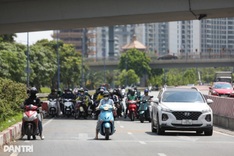
After seven days in operation, a network of 1,837 AI cameras across Hanoi detected 1,020 traffic violations, including 626 cases of red-light running and 361 cases of riders not wearing helmets, according to the Hanoi Traffic Police Department.
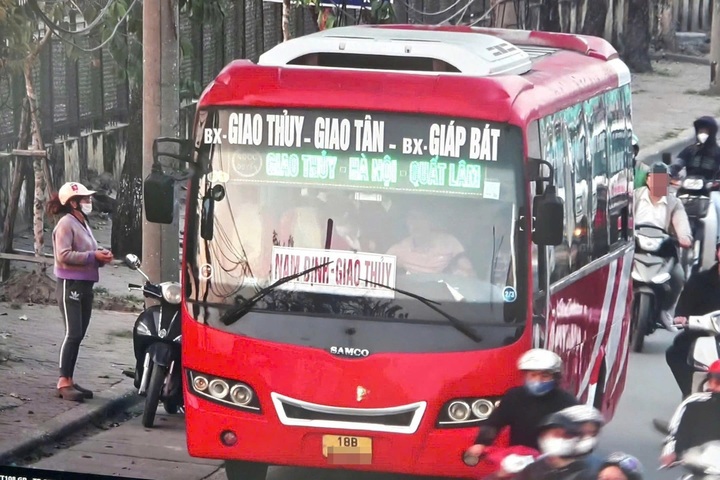
A passenger bus is caught illegally stopping on a street in Hanoi.
On the afternoon of December 21, 2025, the department said it had conducted evaluations at multiple intersections along major routes such as Tran Phu, Tran Hung Dao, Pho Hue, Hai Ba Trung, Nguyen Thai Hoc and the Giai Phong-Truong Chinh axis.
“One hundred per cent of intersections using AI-controlled traffic lights recorded an increase in traffic flow. Improvements ranged from 4 per cent to more than 18 per cent, depending on the geometric characteristics of each junction and traffic composition,” a representative of the Hanoi Traffic Police said.
At complex, high-density intersections such as Nguyen Thai Hoc-Ton Duc Thang and Giai Phong-Truong Chinh, traffic flow improvements remained stable at between 6 and 11 per cent, demonstrating that the system operates effectively and reliably under heavy traffic conditions, police said.
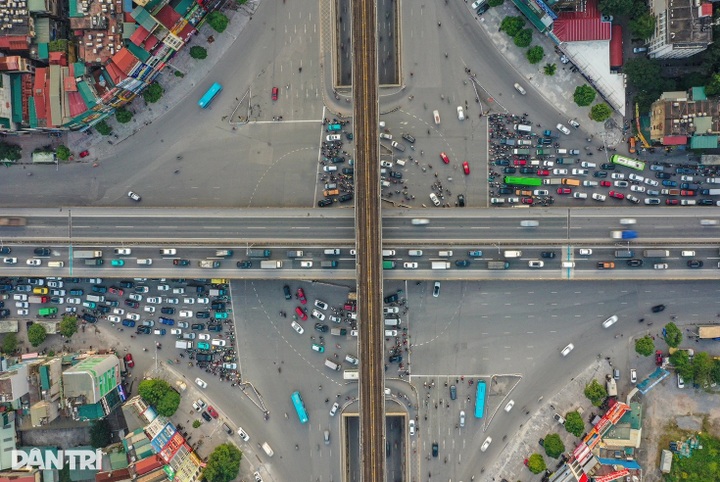
Hanoi authorities have reported positive changes in road users’ compliance with traffic laws since the deployment of AI cameras
Beyond traffic management efficiency, authorities noted positive changes in road users’ compliance with traffic laws. Drivers and riders were more likely to obey traffic lights, stop behind designated lines and reduce red-light violations and illegal stopping or parking.
Many residents have also expressed support for the use of AI cameras, saying the technology helps make traffic management more transparent and fair, while encouraging voluntary compliance with traffic regulations.