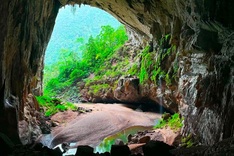
Part of the Vom Cave system, Over Cave stretches for more than 3km, with an entrance about 30 metres wide and 25 metres high.

Some sections open into vast chambers reaching up to 125 metres across, creating an impressive expanse within the limestone mountains.

Deep inside the cave, mineral pools form successive tiers across the limestone floor, resembling miniature terraced fields. During the rainy season, when water fills the pools, their clear turquoise surfaces highlight the natural stone ridges shaped over long periods.

The cave floor features numerous mineral pools and terraces bordered by natural ridges. These formations develop as mineral-rich water flows over limestone, depositing layers of minerals over time. The process gradually creates distinctive tiered terrain unlike the more typical rocky floors found in caves.

The pools’ appearance changes with the amount of water inside the cave. After periods of rain, water seeps through layers of rock, follows cracks and flows down to the cave floor, filling depressions and mineral terraces. As water covers the stone steps, a succession of small pools emerges, creating a rare turquoise landscape.

The ridges surrounding the pools have formed through the precipitation and accumulation of minerals carried by flowing water. Over time, these deposits create natural barriers that divide the cave floor into separate basins and levels. The geological formations give Over Cave its distinctive appearance.

The pools are not always full. When water levels fall, dry basins and exposed stone steps reveal the layered structure of the cave floor. These changes mean the same area can look very different depending on hydrological conditions.

Beyond its mineral pools, Over Cave also contains a variety of stalactites formed through the geological processes that shape caves.

Over Cave forms part of the Dai A-Over-Pygmy caves exploration route, which attracts visitors interested in nature and cave landscapes. The journey requires visitors to follow the designated route and safety instructions provided by the tour operator to minimise their impact on the cave environment.

Mineral pools are also a distinctive feature of other parts of the cave system in Phong Nha-Ke Bang. Another striking example is the palace-like scenery inside Hung Thoong Cave.

Phong Nha-Ke Bang has recorded more than 470 caves, with a combined length exceeding 250km, making it one of the world’s most extensive and distinctive karst landscapes.
Photos: Jungle Boss