Recently returning from a field trip to the Democratic Republic of the Congo, Nguyen Dang Nghia, director of the Tropical Agricultural Research and Consulting Centre, said the country holds enormous potential for rice farming using Vietnamese techniques.
The trip was organised by a US-based company owned by a Vietnamese expatriate to evaluate the feasibility of rice production in Congo. The company plans to apply the full production model used in the Mekong Delta, including rice varieties, fertilisers, irrigation systems and cultivation techniques.
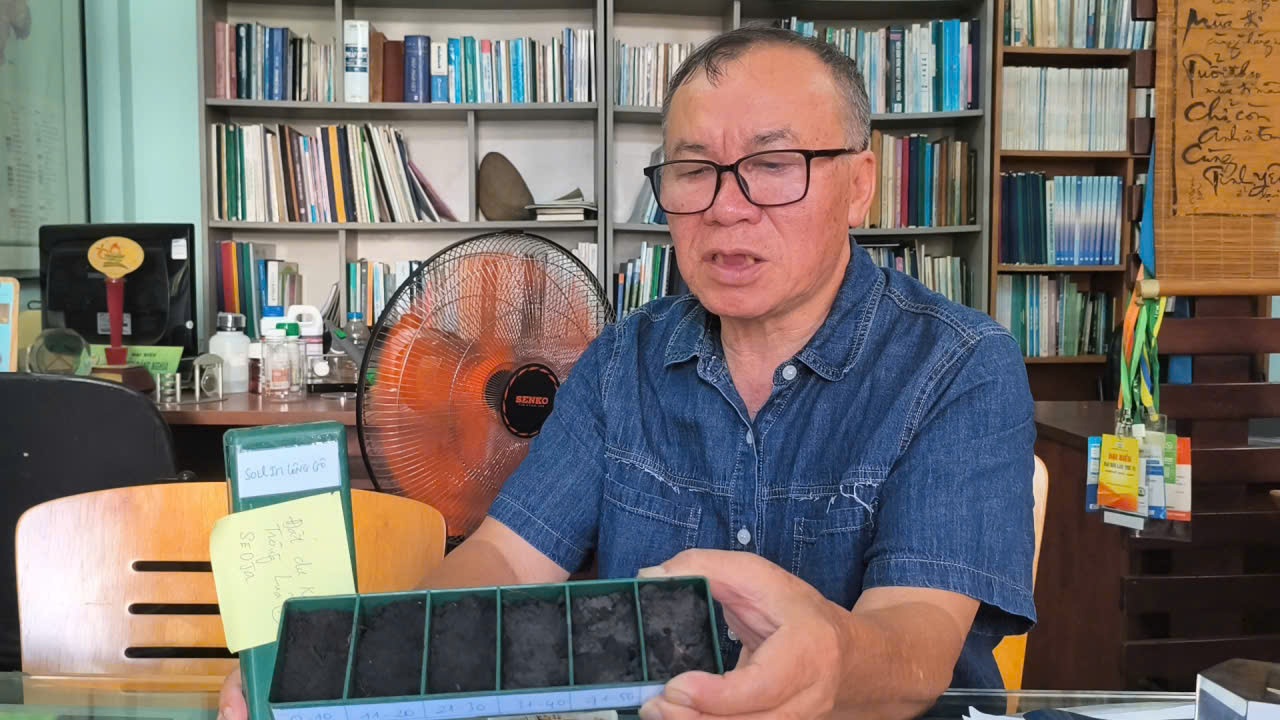
Dr Nguyen Dang Nghia, Director of the Tropical Agricultural Research and Consulting Centre, with soil samples collected from the Democratic Republic of Congo (Photo: Tran Manh).
Nghia said soil samples collected during the survey showed the land was fertile and suitable for large-scale rice farming.
Expanding Vietnamese rice know-how abroad
Africa, which possesses vast agricultural land but still faces frequent food security challenges, has become a key focus of Vietnam’s agricultural cooperation strategy. Vietnamese experts typically focus on two main areas: irrigation management and improving farming practices.
The effectiveness of this approach has already been demonstrated in several countries. In Sierra Leone, Vietnamese specialists helped farmers shift from rain-dependent cultivation to irrigated farming, introduced short-duration rice varieties and improved field infrastructure.
As a result, areas that once produced only one crop per year can now grow two or even three rice harvests annually, increasing both food supply and farmers’ incomes.
Similar projects have been expanded to Mozambique, Tanzania and Sudan, where irrigation improvements have helped boost rice yields to as high as 8.5 tonnes per hectare in some regions.
Vietnam has also signed government-level agricultural cooperation with Angola, with projects scheduled to begin in 2026 focusing on rice, cassava and soybeans.
Cuba project seen as the most successful
Experts often cite Vietnam’s long-running rice cooperation programme with Cuba as the most successful example of exporting its agricultural model.
The Vietnam–Cuba rice project ran for 23 years from 2002 to 2025 and significantly improved the Caribbean nation’s rice production. During 2005-2011, when Cuba faced economic sanctions and had to import 400,000-450,000 tonnes of rice annually, Vietnam provided comprehensive support including machinery transfers, technical training and rice breeding programmes.
In recent years, the project focused on rice production in Calimete district in Matanzas province, introducing laser land-levelling technology and modern irrigation systems.
Four locally adapted rice varieties known as the “ViBa” series were developed, helping Cuba secure its own seed supply. Rice yields increased from around 2 tonnes per hectare to an average of 5 tonnes, and in some areas up to 7 tonnes per hectare.
By 2024, Cuba’s rice imports had fallen to about 210,000 tonnes, opening prospects for expanding the project to 100,000 hectares.
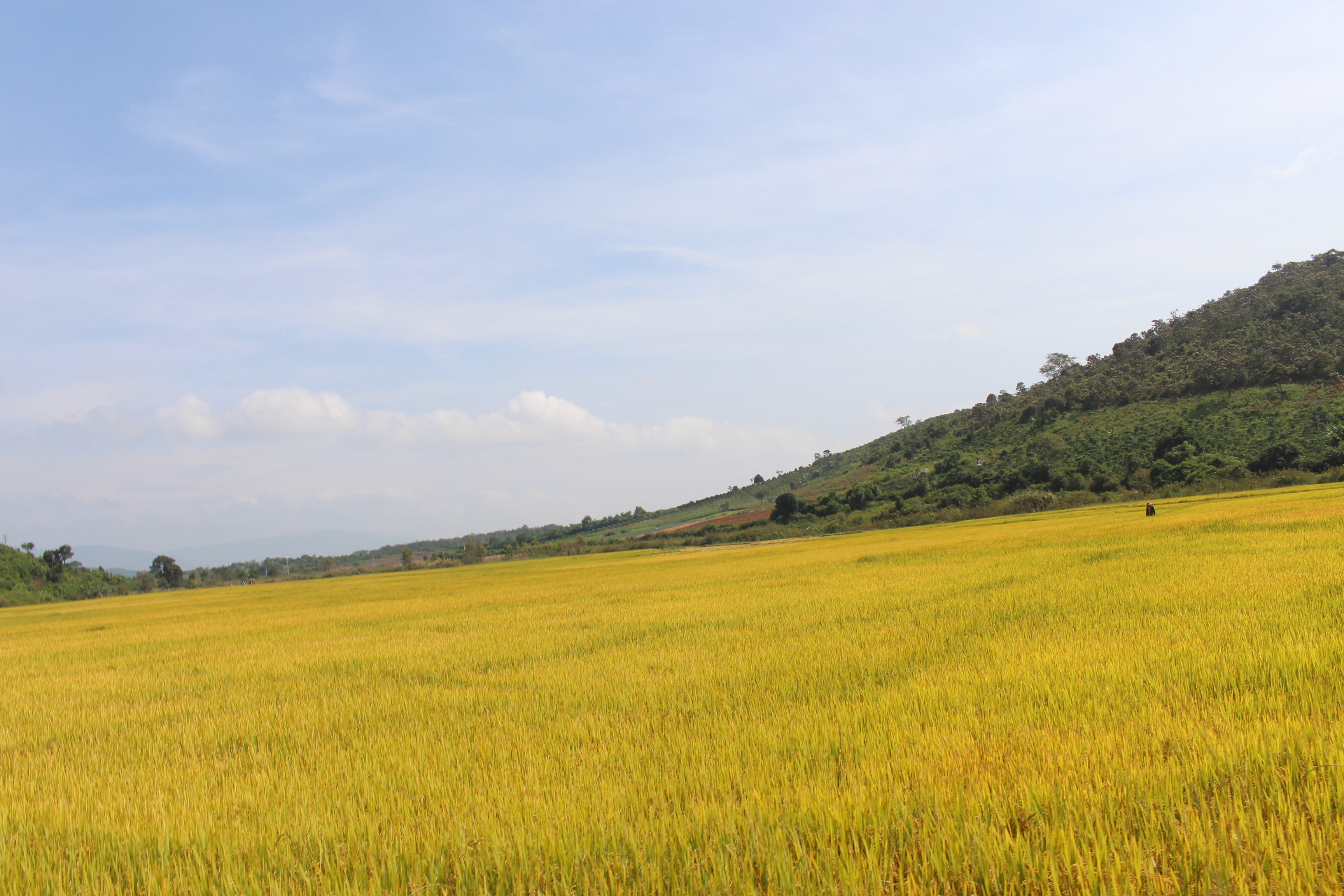
Vietnam's wet rice cultivation model offers many superior advantages for transfer to less developed agricultural countries in Africa, Latin America, and Southeast Asia (Photo: Tran Manh).
Exporting low-emission rice farming models
Amid global efforts to combat climate change, Vietnam is also shifting its role in the global rice value chain from simply exporting grain to exporting sustainable farming models.
A key pillar of this strategy is the government-approved project to develop one million hectares of high-quality, low-emission rice in the Mekong Delta by 2030. The initiative has been praised by organisations such as the World Bank for its comprehensive approach to reducing emissions in rice production.
Pilot projects launched in provinces including Can Tho, Soc Trang, Dong Thap, Tra Vinh and Kien Giang have shown promising results.
Farmers are using fewer seeds, reducing chemical fertilisers and cutting irrigation water by 20-30 per cent while maintaining stable yields.
The programme also uses a monitoring system known as Measurement-Reporting-Verification (MRV) to quantify emissions, laying the groundwork for generating tradable carbon credits.
From exporting rice to exporting knowledge
Vietnam’s long-term strategy is not only to export rice but also to export agricultural knowledge, technology and services.
Under the country’s rice export strategy to 2030, annual exports are expected to decline gradually to about 4 million tonnes from the current 7-8 million tonnes. Lower-grade white rice will make up less than 10 per cent of exports, while premium fragrant varieties and specialty rice such as ST25 rice will account for about 45 per cent.
At the same time, Vietnam is promoting value-added rice products including nutritional rice, rice-based beverages and high-end confectionery.
Through these initiatives, Vietnam aims to move from exporting raw agricultural commodities to becoming a global provider of sustainable agricultural technology and expertise.