Located in Hoi An Dong Ward, the former Cam Thanh Village sits where the Thu Bon, Truong Giang and Lo Canh Giang rivers converge before reaching the sea, creating a distinctive brackish-water ecosystem.

Its best-known attraction is the Bay Mau nipa palm forest, where winding canals form the centrepiece of the area’s river-based tourism.
In 2025, US magazine Forbes ranked Cam Thanh 20th among the world’s 50 most beautiful villages, making it the only Vietnamese village included in the list.

The Bay Mau palm forest has become a major eco-tourism destination in recent years, with local operators expanding decorative features using bamboo, wood and fishing floats to attract visitors.

In 2024, the basket-boat ride through the forest was ranked among the world’s top 25 boat experiences by Tripadvisor.

Visitors can take basket boats through the palm groves, watch traditional fishing demonstrations, catch crabs and snails, listen to folk performances and join environmental activities.

One of the area’s signature attractions is the basket-boat dance, in which local rowers spin the round bamboo boats rapidly on the water in a 180-degree display of balance and skill.

The high-speed spins have become a thrill-seeking highlight for many visitors, though operators warn the activity is not suitable for those with heart conditions or vertigo. Tourists can also try catching crabs, prawns and fish in the waterways.
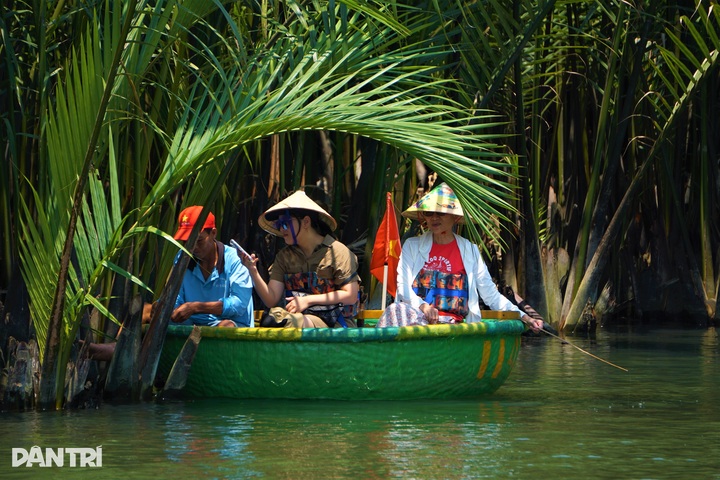
Around 1,000 residents are currently involved in basket-boat tourism services in the village, according to preliminary estimates.

For those preferring to stay on land, cycling routes wind through narrow village lanes, lotus ponds and shrimp farms.

Local authorities said they are surveying less-visited parts of the Bay Mau Forest to develop quieter, nature-based tourism routes focused on local culture and sustainability.
Planned new routes may incorporate traditional arts performances and historical storytelling to diversify tourism offerings and ease pressure on crowded areas.

Cam Thanh is also known for houses built from bamboo and nipa palm leaves, which residents continue to harvest and weave for roofing.

In nearby rice fields, visitors can also ride water buffalo, a service developed after local farmers noticed tourists frequently stopping to photograph grazing animals.