The move aims to ensure all communes and wards meet standards of order, with visible improvements in urban appearance and living conditions, helping build a brighter, greener, cleaner and safer capital.
The committee has identified four key bottlenecks in maintaining urban order, including an inconsistent legal framework with overlapping rules and weak penalties, as well as inadequate infrastructure such as overloaded transport networks, limited parking and uneven pavements.
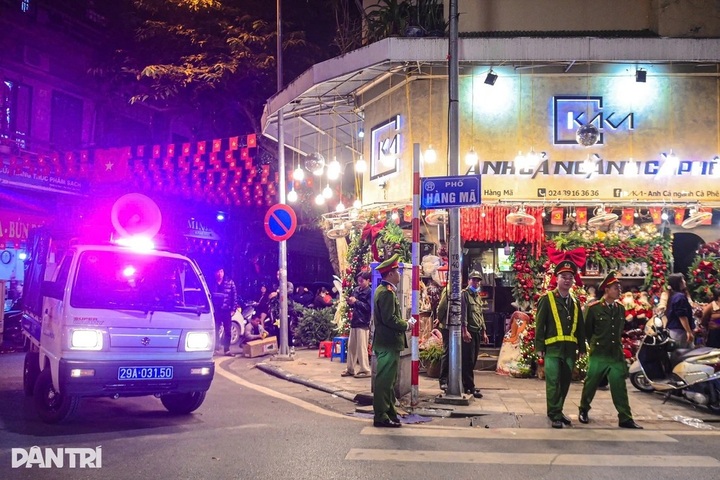
Authorities clear pavement violations in Hoan Kiem Ward (Photo by Manh Quan)
The agency also highlighted low public awareness, with some residents maintaining pavement-culture habits, and weak grassroots coordination marked by fragmented responsibilities, no unified lead agency, no shared database and ineffective monitoring.
The committee has set criteria for ensuring urban order, covering infrastructure, traffic management, urban aesthetics and environmental sanitation. The requirements include clean, even pavements, full traffic signage and the removal of informal street markets.
Besides, vehicles on pavements must be neatly arranged, and parking sites must be licensed, marked and clearly priced. Signs and advertisements must comply with size and placement rules, while drainage systems must remain clear of blockages and local flooding. Streets and pavements must stay clean, with rubbish collected on schedule.
Hanoi’s plan to restore urban order is scheduled to run until late 2027 and will begin with three phases.
The first phase, focusing on public communication, surveys and repainting pavement and road markings, is to finish by December 31, 2025. The second phase, an inspection and enforcement drive across the city, must be completed before January 30, 2026. The third phase is dedicated to maintaining order and preventing repeat violations.
In the longer term, the city will revise legal and policy frameworks, upgrade infrastructure and apply technology in monitoring to address persistent issues such as flooding, congestion, pollution and food safety.
Hanoi has launched similar campaigns in the past to reclaim pavements for pedestrians, but improvements have often been short-lived as weak monitoring allowed encroachment to return.