
Garment and textile exports are expected to have a difficult year as global economic woes are still plaguing major markets such as the EU and the US, according to the Vietnam Textile and Apparel Association (Vitas).
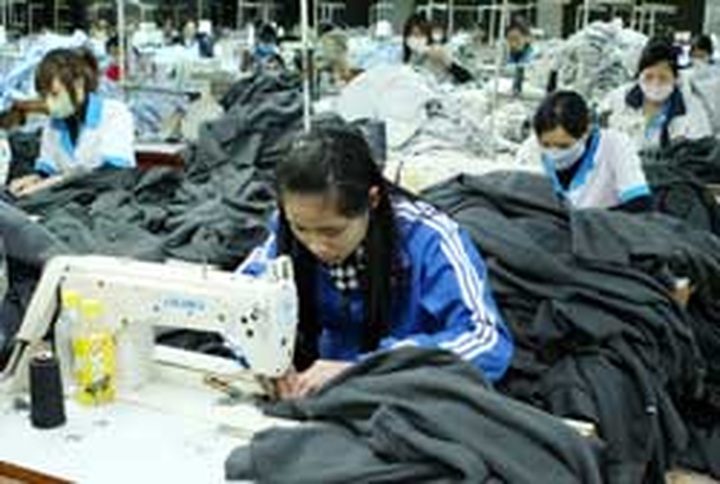 |
| Workers of Viet Huy Garment Co in Hanoi's Thuong Tin Industrial Park make garments for export to the EU. Many garment makers specialising in exports to the EU market have gradually lost market share are expected to have a difficult year. — VNA/VNS Photo Tran Viet |
Many garment and textile exporters specialising in exports to the EU market have gradually reduced their exports to the market and increased exports to other markets, including the US, Japan, Korea, Russia and ASEAN countries.
The Sai Gon Garment Manufacturing Trading Joint-Stock Company, for instance, plans to reduce its export ratio to the EU from 70 per cent to 40 per cent, while boosting shipments to the US and Japan.
Le Dong Trieu, general director of Gia Dinh Textile and Garment Corporation, said the corporation had mapped out a series of measures for production and export this year.
Under the plan, besides fostering relationships with traditional buyers, the corporation's members will be more active in seeking new customers in new markets and raising the ratio of FOB (free-on-board) production to add more value, according to Trieu.
In addition, its members companies will support one another in seeking new export orders.
Despite many difficulties, the country earned USD15.6 billion in garment and textile exports last year, up nearly 38 percent over the previous year.
Exports to the US reached $7.1 billion, a year-on-year increase of 13 percent, and exports to the EU and Japan topped $2.4 billion and $1.65 billion, up 25 per cent and 43 percent, respectively.
The garment and textile industry has set a target of earning $15 billion from exports this year, up only 10-12 percent over last year, Vitas said.
However, to reach $15 billion export turnover for 2012 will not be an easy task for the country's textile and garment sector due to an uncertain world economy, according to Le Tien Truong, deputy chairman of Vitas and deputy general director of Vietnam Textile and Garment Group (Vinatex).
In addition, production costs, including prices of electricity, water, fuel, workers' salaries and bank loan interest, are all on the rise.
To maintain growth rate, Vitas has asked textile and garment enterprises to improve their market forecasts and markets carefully, and become strategic partners with major material suppliers.