Environmental, social and governance (ESG) standards are becoming a key pillar of Vietnam’s growth model as investment, consumption, exports and foreign capital increasingly depend on sustainability requirements, economist Le Duy Binh said.
Binh made the remarks at a conference on sustainable double-digit economic growth held by Dantri/DTiNews in Hanoi on May 27. The event was part of the Vietnam ESG Forum 2026.
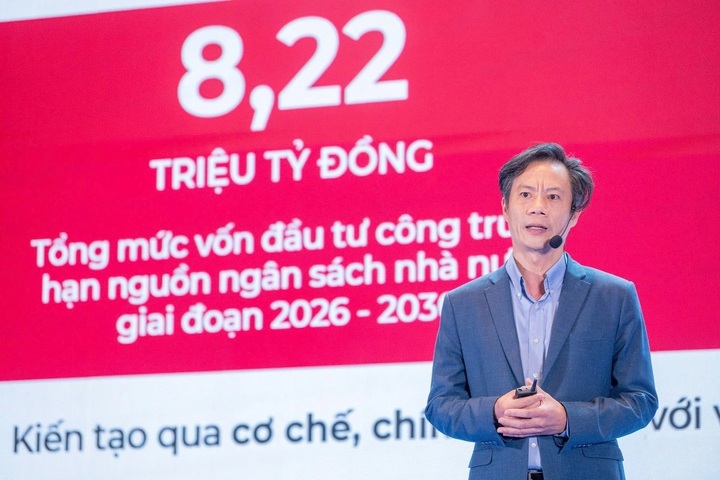
Speaking at a conference hosted by Dantri/DTiNews Newspaper, Dr Le Duy Binh, director of Economica Vietnam, said Vietnam’s growth strategy must prioritise not only rapid expansion but also sustainability and living standards.
According to Binh, Vietnam’s traditional growth drivers, investment, consumption and exports, are increasingly being reshaped by ESG-related standards and market pressures.
He said the government plays a key role as both policymaker and the country’s largest consumer through public spending and procurement. Vietnam’s medium-term public investment plan for 2026-2030 is projected at around VND 8.22 quadrillion (USD 312.5 billion), while recurrent state budget spending is expected to reach VND 10.06 quadrillion.
“Through public procurement, project selection and capital allocation, the government can steer businesses towards greener and more responsible practices,” Binh added.
Consumer demand is also increasingly supporting ESG adoption. Vietnam’s retail sales and consumer services revenue reached around VND 7 quadrillion (USD 269 billion) in 2025, while the government targets annual consumption growth of 11-11.5 per cent in the coming years.
Binh cited data showing that around 84 per cent of Vietnamese consumers are willing to pay more for environmentally friendly or ESG-committed products, with Millennials and Generation Z, who account for more than 45 per cent of the population, driving the shift towards responsible consumption.
He noted that rising incomes were pushing consumers to place greater emphasis on environmental protection, health and social responsibility, forcing businesses to adopt greener, more transparent and better-governed models or face growing competitive pressure.
In the export sector, Binh described ESG as an increasingly mandatory technical requirement replacing traditional tariff barriers. Vietnam aims to raise total import-export turnover to USD 1 trillion by 2030, but exporters will need to comply with stricter environmental and traceability standards in key markets.
He pointed to measures such as the European Union’s Carbon Border Adjustment Mechanism (CBAM), anti-deforestation regulations and supply-chain traceability rules, which are placing growing pressure on Vietnamese exports including steel, cement, construction materials and agricultural products.
“ESG is no longer optional but a prerequisite for businesses seeking access to global markets,” Binh said.
ESG creates new growth drivers and capital flows
According to Binh, ESG is also opening major opportunities for Vietnam to attract capital and develop new growth drivers, with total social investment demand for the 2026-2030 period estimated at around VND 38.5 quadrillion ($1.5 trillion), of which the private sector is expected to contribute about 80 per cent.
However, Vietnam’s green bond, social bond and sustainable bond market remains relatively small, valued at around VND 33.5 trillion (USD 1.4 billion), accounting for less than 2.2 per cent of the country’s corporate bond market.
Outstanding green credit currently stands at around VND 780 trillion, equivalent to about 4.19 per cent of total lending across the economy, mainly concentrated in sustainable agriculture, renewable energy, green buildings and environmentally friendly transport projects.
Binh said ESG standards were becoming increasingly important in attracting next-generation foreign investment, as multinational firms including Apple, Lego and Nestlé increasingly prioritise renewable energy, carbon emissions and green supply chains.
According to Binh, ESG should be viewed not merely as a compliance framework but as a foundation for a new growth model centred on green development, the digital economy and innovation.