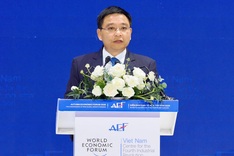
Cao Hong Phong, deputy general director of Gemalink International Port, made the remarks at a session titled “Sustainable global value chains: Green logistics” on October 27, as part of the 2026 Autumn Economic Forum.
Phong said green logistics involved more than using environmentally friendly transport. It also required transparency, reliability and practical efficiency throughout the goods transportation process. He proposed piloting a system to connect refrigerated container data from the Mekong Delta to the Cai Mep-Thi Vai port complex, enabling stakeholders across the transport chain to plan deliveries and collections more proactively.
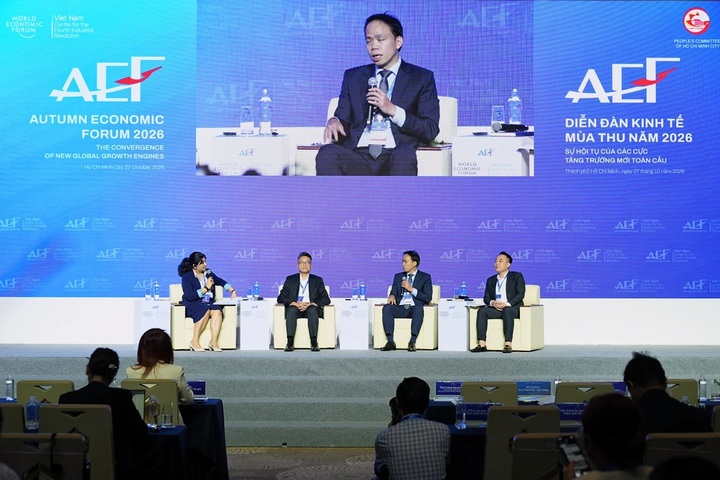
He cited the example of a furniture manufacturer needing to export 10 containers to the United States. To ensure the shipment moved according to schedule, all parties would need accurate information on when the goods were ready for loading onto barges, where to collect empty containers, when loading would be completed and the transport schedule. A disruption at any stage could cause the shipment to miss its scheduled departure, generating additional costs and emissions.
Based on this experience, Phong argued that green logistics did not necessarily have to begin with major investments in vehicles or new technologies. The first priority was to connect, update and share information among manufacturers, cargo owners, transport companies and port operators to ensure timely deliveries and collections.
“Investing in electric barges, installing solar power systems at warehouses and yards, or using electric vehicles within ports are all tools for the green transition. However, without coordination and information sharing among stakeholders, it remains difficult to improve logistics efficiency,” Phong stressed.
From a policy perspective, Bui Ba Nghiem, a senior expert at the Ministry of Industry and Trade's Import-Export Department, said green logistics development should go hand in hand with digital transformation, with economic efficiency, environmental benefits and feasibility serving as key benchmarks. The process should cover the entire supply chain, from raw material sourcing, transportation, warehousing, production and distribution to recovery, reuse and recycling.
On policy, he proposed further administrative reforms, including streamlining specialised inspections and customs clearance to reduce waiting times, storage costs and unnecessary transport. Other priorities included promoting the National Single Window and ASEAN Single Window mechanisms, electronic documents and standardised logistics data.
In terms of infrastructure, stronger links are needed between raw material production areas, logistics centres, seaports, airports and border gates, alongside more efficient use of inland waterways, railways and coastal shipping. For HCM City and the southern economic region, Nghiem proposed studying an integrated model linking production, warehousing and waterway transport with the Cai Mep-Thi Vai port complex, while addressing bottlenecks involving shipping channels, terminals, cargo consolidation points and port hinterland infrastructure.
He also proposed piloting green logistics models involving cargo owners, logistics companies, technology providers and financial partners.
“From the outset, baseline data, evaluation periods and specific indicators should be established, including emissions, energy consumption, costs per unit of cargo, on-time delivery rates and cargo losses. The pilot results will provide a basis for selecting solutions that can be scaled up,” Nghiem said.
Hoang Nguyen Dinh, vice-chairman of the HCM City People's Committee, said global value chains were being reorganised to become greener, more transparent and smarter. Businesses able to meet these requirements would be better positioned in future production networks.
Dinh said greening and improving transparency were no longer merely compliance costs but had become conditions for market participation and access to capital.