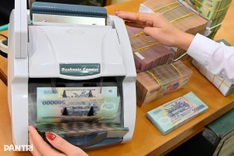
Enterprises claim lowering the lending interest rate can help the economy, but banks have stated that this would be a difficult task.
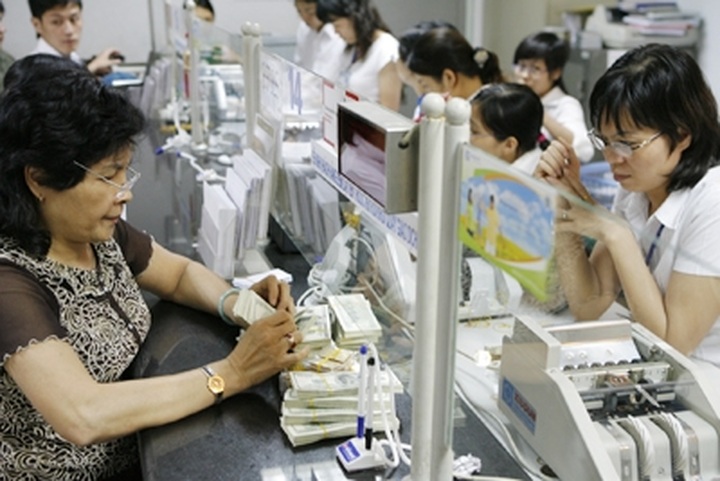
Enterprises ask that lending rates be lowered
Van Duc Muoi, Head of the food processing company, Vissan, said because his company has established a solid reputation and good relations with several banks, which have given them the ability to borrow money with interest rates lower than 10% per year.
However, compared with the cap interest rate of just 7% a year in other Asian countries, Vietnam's interest rates remain relatively high. Enterprises have complained that high interest rates would push up the commodity prices, discouraging consumption.
"The government is trying to lower the interest rates, along with other forms of economic stimulus. The current interest rates for long term loans of 15-16% could pose a problem for many businesses. We would like to see that rate to drop to around 8% this year," Muoi said.
One business owner in HCM City said that his company had to improvise financial plans because of the high lending rates. "There were times when we borrowed from our own employees at an annual rate of 8%. This lowered our dependence on the banks," he said.
Meanwhile, though the lending interest rates for the US dollar are only 5-7%, enterprises are reluctant to take out loans out of fear of fluctuation in exchange rates.
Banks unable to lower lending rates
Annual interest rates have hovered around 8% for one to 12 months deposits and 10-11% for those above 12 months. However, some small-scale commercial banks still apply a rate of 12% for term deposits above 12 months.
Vietnamese banks have shown themselves to be hesitant to lower lending interest rates as long as interest rates on deposits remain the same. Most private bank loans are for terms more than six months.
In the meantime lending interest rates for businesses has reached around 11-15% for short-term loans and 14.6-17.5% for long-term loans, and banks have made no signals of willingness to adjust these rates.
One of the reasons most often given is the required VND100 trillion (USD4.8 billion) required of any bank for their risk-prevention fund, along with caution during an economically difficult period.
Tran Bac Ha, Chairman of Bank for Investment and Development of Vietnam (BIDV), said that even if banks wanted to it would be impossible to reduce lending interest rates.this year.
Nguyen Duc Thanh, Director of Vietnam Centre for Economic and Policy Research, said lowering lending rates could boost the economy but it must be done carefully to avoid inflation and fluctuation in foreign currency values.